


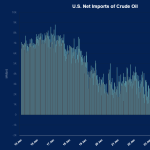
Last week, flat crude oil production, lower imports, record exports, and slightly stronger refinery demand sharply tightened the U.S. crude balance. The biggest shift came from crude oil exports, which surged to a record 6.4 MMb/d and helped push the U.S. into net crude exporter status for the first time ever. Imports fell to 5.75 MMb/d, led by PADD 1 dropping to a record low of 135 Mb/d, potentially aided by the Jones Act waiver encouraging more Gulf Coast barrels to move to the East Coast. Strong outbound flows and firmer refinery runs drove major draws across crude oil, motor gasoline, and distillates. Crude prices responded to the tighter setup, with WTI rising $10.55/bbl, or 12.6%, to end the week at $94.40/bbl. Prices have continued to run up, and WTI is currently trading over $105/bbl.
Featured Articles


Leap of Faith – Potential Plans to Limit U.S. Diesel Exports Come With Plenty of Downside Risk
A series of disruptions to global refining capacity and refined-product flows has raised the prospect of a ban on U.S. diesel exports as a way to keep prices in check. Today, we look at where things stand and how a U.S. export ban could result in a number of major unintended and negative consequences.
Refinery Utilization Hits an Eight-Year High as Product Cracks Remain Strong
As discussed in this week’s Crude Billboard, the EIA’s latest Weekly Petroleum Status Report (WPSR) shows how strong refinery demand and exports can quickly tighten U.S. crude balances, even as imports rise.


Double-Edged Sword – Refinery ‘Capacity Creep,’ Falling Inventories May Limit U.S. Crude Export Surge
U.S. crude oil production averaged a record 13.6 MMb/d in 2025, up nearly 1.6 MMb/d from 2023, but crude export volumes remained remarkably stable — at or very near 4.1 MMb/d — until a recent Iran-related surge. A key reason: “capacity creep” expansion projects at several Gulf Coast refineries.
