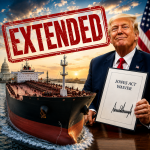
On Monday, August 10, the Trump Administration extended its temporary Jones Act waiver for another 90 days, keeping the exemption in place through mid-November as the War in Iran continues to disrupt global crude and refined-product flows and pressure U.S. energy costs. The administration first issued a 60-day waiver on March 17 (see Me and Mrs. Jones), followed by a 90-day extension in mid-May (see Let It Go, Let It Flow). Unlike those broader waivers, however, the latest extension comes with additional guardrails: qualifying voyages will be reviewed on a case-by-case basis, with the Pentagon required to consult the U.S. Maritime Administration on the availability of U.S.-flagged, -owned and -operated vessels. Eligible commodities have also been narrowed, primarily to energy products including crude oil, gasoline, jet fuel, naphtha and LNG.
Even with those restrictions, foreign-flagged tankers can continue to move U.S. crude between domestic ports when approved, providing valuable flexibility as disruptions to Strait of Hormuz flows reshape global trade patterns and increase competition for alternative barrels. As discussed in this week’s Crude Voyager, the waiver has already enabled otherwise uncommon Gulf Coast-to-West Coast movements and increased Gulf Coast-to-East Coast shipments, allowing domestic crude to compete with imports without the substantially higher transportation costs and limited vessel availability associated with Jones Act-compliant shipping. Voyage-by-voyage approval may temper that flexibility, but extending the waiver through mid-November gives Gulf Coast producers, refiners and traders another outlet for balancing regional supply and demand while Middle East disruptions continue to scramble traditional crude flows.