


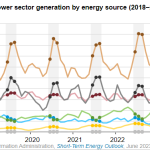
The largest increases in U.S. electricity generation this summer will come from solar, wind, and natural gas-fired power plants, although nuclear power will also get a boost, the EIA said in its Short-Term Energy Outlook for June. Increased generation from those sources will largely be offset by reduced generation from coal-fired power plants.
Featured Articles


- Blog
Only Happy When It Rains - Counting on a Boom in Natural Gas Demand for Power?
Rising demand for electricity to serve data centers, manufacturing and other power-consuming sectors of the economy is spurring the development of scores of gas-fired plants — up to 100 gigawatts (GW) of new capacity by 2040. How much power those new plants will actually generate — and, with that, how much natural gas they will require — remain open questions, however. A recent study indicates that the vast majority of incremental power demand over the next 15 years could be supplied by solar and wind and that gas demand for power may remain pretty much flat. But the Trump administration’s dim view of most renewables — and clear preference for fossil fuels — suggest otherwise. In today’s RBN blog, we discuss gas demand for power in the late 2020s and 2030s.


- Blog
Slow Burn - More Coal-Fired Power Plants Closing on Uncompetitive Economics
Gas-fired power generation in the U.S. has been making impressive gains lately and that trend looks likely to continue. Power demand is growing quickly and generation fueled by cheap natural gas is taking an ever-increasing market share of the new and existing load from more expensive generators like coal and nuclear, which is leading significant numbers of those plants to shut down. The Energy Information Administration (EIA) earlier this year forecast that combined-cycle, gas-fired generation capacity could rise by 6.1 GW between now and 2020, which — if fully called upon — would equate to roughly 1 Bcf/d of gas demand. That growth would displace some older gas-fired generation but also fill the void left by retiring coal-fired and nuclear power generators — two sectors EIA expects to decline over the next couple of years by 14.1 GW and 1.7 GW, respectively. What’s more, surging gas production and rapidly filling pipeline expansions in recent months suggest that gas-fired generation demand may be growing even faster than expected. Today, we take a look at how gas generation has been besting coal-fired plants on fuel costs in recent years, and at the string of nuclear and coal-fired generators that are being permanently retired.


- Blog
Don't Get Me Wrong - Are Government Forecasts Underestimating Gas Burn for Power?
Government forecasts are predicting a sharp drop in natural gas demand in the power sector in the coming decades based on an expectation that the renewable capacity build-out will accelerate and displace other sources. However, forecasts in the past decade have consistently and severely underestimated gas burn for power. In today’s RBN blog, we consider the pitfalls of forecasting gas consumption in a world often focused on pushing a renewables-heavy generation stack.
