


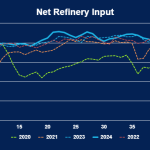
Last week, net refinery inputs increased by 330 Mb/d, reaching 16.1 MMb/d. This rise boosted refinery utilization by 1.8%, up to 89.5%. Refinery inputs began declining the week of September 6, hit their fall maintenance seasonal low the week of October 4, and now appear to be climbing back. Typically, maintenance season lasts until the week before Thanksgiving, but this year's rebound is significantly earlier than usual. In 2023, heavier than usual outages occurred due to delayed maintenance from 2022, and net inputs did not exceed 16 MMb/d until the week of November 24. While its certainly possible refinery inputs could experience a minor dip in the coming weeks, it will be interesting to see whether the industry exits maintenance season weeks earlier than usual or if the remaining facilities resume operations at a slower pace, extending the season to its regular end date.
Featured Articles


Achy Breaky Refineries? – Record Pace of Crude Refining Leads to Higher Fall Maintenance
During the first 7 months of 2015 the U.S. experienced record setting refinery crude processing and utilization rates. By the end of July crude inputs topped 17 MMb/d for the first time and nationwide refineries ran at over 96% of operable capacity - reaping the rewards of robust margins. But the party has been marred by a number of unexpected outages – the latest of which brought down a 250 Mb/d unit at BP’s Whiting, IN refinery last weekend – causing a spike in Chicago gasoline prices. Today we ponder why outages may be occurring and the upcoming impact of overdue fall maintenance.


Here I Go Again - Pemex's Dos Bocas Refinery Still Facing the Startup Blues
One of the most anticipated and potentially impactful refinery startups in North America in years is the Dos Bocas project (officially the Olmeca Refinery), a 340 Mb/d plant under development by Mexico’s state-owned Petroleos Mexicanos (Pemex) in the southeastern state of Tabasco. The project was seen as the cornerstone of Pemex’s plans to reduce Mexico’s dependence on the U.S. for refined fuels. Construction began in 2019 with startup originally scheduled for 2022, but that timeline was never really feasible, and the Mexican government has issued multiple public statements since mid-2023 proclaiming that construction was complete and startup was imminent. However, almost a year has passed and there is no indication that any meaningful operations have occurred. So how close is Dos Bocas to startup and, more importantly, full (or close to full) production? In today’s RBN blog, we’ll provide our views on those vitally important questions.


The Midwest Crack Spread Margins Really Make You Feel Alright!
Ever since US crude production began to increase in 2009 after 40 years of decline from its peak in 1970, refineries have been processing higher crude volumes. This summer (2014) crude processing volumes have been higher than at any time since the Energy Information Administration (EIA) began keeping records in 1982. Abundant supplies of reasonably priced crude in all regions as well as low refinery fuel costs are giving US refiners good reason to crank up their output. So much so that in the Midwest refinery output reached over 100 percent of capacity early in July. Today we describe the refining bonanza and how things might change in the not too distant future.
