


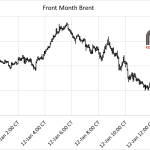
The litany of geopolitical events that could affect the oil markets in recent weeks is long: the Hamas-Israel war in Gaza, Houthi rebel strikes in the Bab El-Mandeb straits and Iran's seizure of a tanker of Iraqi oil in retaliation for a seizure last year by the US of Iranian oil. But the markets have shrugged off each one in turn, if they reacted at all.
After the recent coalition strikes with aircraft and cruise missiles, the International Association of Independent Tanker Owners (Intertanko), which represents almost 70 per cent of all internationally traded oil, gas and chemical tankers warned it's members to avoid the area for "several days" at least, including pausing any vessels that have exited the Suez Canal southbound, and this was apparently enough for markets to notice, with Brent crude rising nearly $2 to $80.75 in the hours after the announcement, see chart below.
Featured Articles


- Blog
Fear Inoculum - Oil Market Shows Concern, Not Panic, Over U.S.-Iran Face-Off
Fear about supply interruption isn’t the frantic force it used to be in the crude oil market. A deadly confrontation that might have pushed the U.S. and Iran to the verge of war raised the spot Brent crude oil price to above $70/bbl early in the week of January 6. Despite continuing regional concerns, the price quickly subsided. By January 13, Brent spot had fallen to $64.14/bbl, its lowest point since December 3. Before the Shale Era, a U.S.-Iranian face-off may well have launched Brent crude to well over $100/bbl as oil traders blew fuses over the heightened possibility of disruption to Persian Gulf oil production and transportation. There’s nothing like adequacy of supply, globally dispersed, to keep things calm — or at least calmer than they would have been if the U.S. and Iran had drawn so much sword a dozen years ago. In this blog, we’ll discuss where U.S. crude exports have been heading, how close the oil gets to strategically touchy areas, and whether the market still has reason to worry about disruption to oil supply.
- Analyst Insight
Are the Houthi Rebels Long Oil?
Oil Market yawns as latest rebel attack is easily repulsed.


- Blog
The Long Way Around - For U.S. Exporters, Avoiding Panama, Suez Canals Comes at a Cost
Two maritime passages long regarded as essential shortcuts in the complex world of commodity shipping have become a lot more challenging to navigate. Transiting the Red Sea has turned potentially deadly because of geopolitical tensions, while severe drought has critically reduced operations at the Panama Canal. Combined, these issues are being felt across the energy industry, impacting U.S. and foreign producers and shippers, redrawing trade flows, extending voyage times and, ultimately, raising transportation costs. In today’s RBN blog, we’ll examine and quantify the extra time and costs that shippers of U.S. crude and refined products must bear when using alternative routes.
