


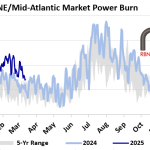
Demand for natural gas in the Northeast fell last week as the weather got warmer in anticipation of the start of spring. Overall Northeast demand averaged 24.2 Bcf/d for the week ended March 11, down 3.1 Bcf/d from the prior week. While demand for natural gas was lower than the prior week, it was still higher than the 5-year average as we come to the end of a colder-than-usual winter. Res/Comm demand dropped by 2.3 Bcf/d week on week while Power demand fell by 0.6 Bcf/d and Industrial demand was down by 0.2 Bcf/d. In response, cash basis at Eastern Gas South and Tennessee Zone 4 declined week-on-week.
Featured Articles


- Blog
Turn the Page - Producer Restraint, Tighter Balances Disrupt Appalachian Gas Market Trends
Before the bullish winter of 2021-22, it appeared the Northeast natural gas market was headed for familiar territory: worsening seasonal takeaway constraints and deeper, constraint-driven price discounts starting as early as this spring. Instead, the market went in the other direction the past few months. Takeaway utilization out of Appalachia has been lower year-on-year and, for the most part, Appalachian supply basin prices have followed Henry Hub higher even as that benchmark rocketed to 14-year highs. That’s not to say that constraints out of the Northeast aren’t on the horizon. But the market is now poised to escape the worst of it this year, despite the completion of the last major takeaway pipeline project in the region, Mountain Valley Pipeline (MVP), being pushed out another year or longer, if it crosses the finish line at all. In today’s RBN blog, we provide an update on regional fundamentals and what recent trends mean for gas production growth and pricing in the region.
- Analyst Insight
Northeast Gas Demand Dwindles on Lower Power Demand, LNG Maintenance
Demand for natural gas in the Northeast headed downward last week on lower power and LNG demand.
- Analyst Insight
Appalachian Gas Production Remains High Despite Low Regional Demand
Demand for natural gas in the Northeast continued to decline, but production is holding steady in defiance of the typical shoulder-season trend.
