


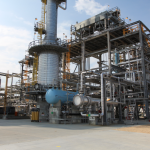
ExxonMobil announced on Tuesday, August 26, 2025, that it has reached Final Investment Decision (FID) on a large-scale reconfiguration project at its Baytown, Texas Refinery and Petrochemical Complex. According to the company's announcement, the project - scheduled for startup in 2028 - is designed to enhance and realign their production portfolio, strengthening long-term competitiveness within a transitioning energy market.
Featured Articles


- Blog
You Crack Me Up - Refiners Increasingly Relying on Hydrocracking Capacity As Fuel Demand Shifts
More than a decade ago, several U.S. refiners brought new hydrocracking capacity online, wagering that rising demand for middle distillates made such major investments necessary. They were good bets. Demand for jet fuel is expected to continue to grow, and while diesel demand is seen as relatively flat in the U.S. over the next few years, it will continue to climb globally through 2045, according to RBN’s recently released Future of Fuels report. In contrast, the report also sees domestic gasoline demand declines accelerating post-2026 and peaking globally by about 2030, as more consumers turn to electric vehicles (EVs). These contrasting trajectories for middle distillates vs. gasoline will put a growing premium on distillate-centric hydrocracking capacity. In today’s RBN blog, we’ll examine trends incentivizing hydrocracking capacity and how these units will allow U.S. refiners to maintain their competitiveness in a rapidly changing product market.


- Blog
When Worlds Collide - U.S. Gulf Coast Refiners Face Challenges to Accessing Heavier Crude Oil
The prospect of decreased crude oil supplies from Mexico, the top international supplier to the U.S. Gulf Coast (USGC), is creating uncertainty among heavy crude-focused refineries. Mexico’s state-owned energy company, Petróleos Mexicanos (Pemex), instructed its trading unit to cancel up to 436 Mb/d of crude exports for April to supposedly focus on processing domestic oil at its new 340-Mb/d Dos Bocas refinery and/or its existing plants. While the refinery’s startup is likely not nearly as imminent as Pemex says, the cancellation of Mexican crude imports could be problematic for U.S. refiners with plants built to run heavy crude, a necessary ingredient to optimize operations and yields. Adding to the complexity of the situation is the upcoming startup of the Trans Mountain Pipeline expansion (TMX) and the recent reinstatement of U.S. sanctions on Venezuelan crude. In today’s RBN blog, we’ll examine the potential fallout resulting from Pemex’s decision at a time when heavy crudes elsewhere are also becoming less available.


- Blog
Little Old Lady From Pasadena - Chevron's 105-Year-Old Texas Refinery Gets a New Lease on Life
More than 15 years into the Shale Era, the U.S. refining sector’s response to burgeoning production of light, sweet crude oil continues. Earlier this month, Chevron completed the long-planned, $400 million renovation and expansion of the century-old refinery in Pasadena, TX, which the company acquired from Petrobras in 2019. In today’s RBN blog, we discuss the refinery’s extensive history, why Chevron bought the facility five years ago, and how the just-finished project will enable the integrated oil and gas giant to make fuller use of its Permian oil bounty.
