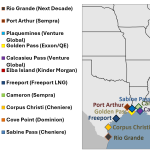
It’s been a long road for Golden Pass LNG, but the Texas Gulf Coast export terminal finally got some good news this week. The DOE granted the project a three-year extension on its permit to begin exporting to non-FTA countries, giving ExxonMobil and QatarEnergy until November 2029 to get the facility up and running. While the circumsances were somewhat different, a denial last year of Port Arthur LNG's request for extension, coupled with pause on new permits for LNG exports to non-FTA countries, had been cause for some concern. But, taken with other recent permits granted, there has been a significant shift in Washington’s LNG stance. With the Biden pause now in the rearview mirror and Energy Secretary Chris Wright is making it clear that the goal is to fast-track approvals and remove barriers that have held projects, it’s full steam ahead .
That shift is welcome news for Golden Pass, which has battled major construction delays that have already pushed its first exports well past initial timelines. Train 1 was supposed to start up in early 2024, but by last winter, that target had slipped to early 2025 thanks to labor and supply-chain constraints. Then came the biggest blow—Zachry Holdings, one of the project’s key EPC contractors, went bankrupt in May 2024, bringing construction to a halt and forcing ExxonMobil and QatarEnergy to scramble for a solution. A court-approved settlement in July allowed Zachry to exit the project and cleared the way for McDermott and Chiyoda to take over, but the damage was done. With lost time to make up, many in the industry are now eyeing late 2025—or even later—for first feedgas, pushing back a long-anticipated jump in U.S. LNG export capacity.
The lack of new capacity in 2024 meant that, for the first time since the U.S. started exporting LNG in 2016, annual feedgas demand didn’t grow. That trend is now set to reverse, with the combination of Golden Pass, Venture Global’s Plaquemines, and Cheniere’s Corpus Christi Stage III expansion poised to add more than 4 Bcf/d of feedgas demand by the end of 2026. With some of the political obstacles falling away, the U.S. looks poised to strengthen its position as a dominant force in global LNG markets.