


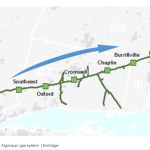
Enbridge is floating an open season to solicit interest from potential shippers for an increase in service as part of an expansion project on Algonquin pipeline. The project, Project Maple, would expand capacity on the Algonquin gas system by up to 750 MMcf/d, 500 MMcf/d at the Ramapo, N.Y., receipt point at the western end of the pipeline and 250 MMcf/d at the Salem, MA., receipt point at the eastern end. The total current capacity of the Algonquin system is just over 3 Bcf/d the new capacity will be 3.75 Bcf/d if the expansions are fully subscribed.
Featured Articles


- Blog
Just One More - How New England Would Benefit From a Gas Pipeline Expansion
New England is hell-bent on decarbonizing quickly, and it’s been making some progress. But like it or not, the region still depends heavily on natural gas for both power generation and space heating, and gas supplies are stretched to the limit during periods of extreme winter demand. Worse yet, the Everett LNG import terminal, which for years has fed a big, soon-to-close gas-fired power station and supported the Boston area’s gas grid, may be on the verge of shutting down. Well, help may finally be on the way. Enbridge recently proposed an expansion to its 3-Bcf/d Algonquin Gas Transmission pipeline system. The question is, can it get built in a region notorious for its opposition to energy infrastructure projects? In today’s RBN blog, we discuss Enbridge’s Project Maple and the role it could play in New England’s aggressive plan to reduce its greenhouse gas (GHG) emissions.


- Blog
Personality Crisis - What's Ahead for New England's Power Grid? Is More Gas Part of the Answer?
Two factors — public concern about soaring utility bills and President Trump’s strong opposition to offshore wind — are forcing New England to rethink its once-ambitious plans for a renewables-heavy electric grid and reassess how to meet its power-generation needs in the late 2020s and early 2030s. One possibility would be to expand the region’s access to piped-in natural gas, but midstreamers’ previous efforts to add pipeline capacity were beaten back time and again. In today’s RBN blog, we discuss New England’s ongoing debate about what to do next.


- Blog
Polar Vortex Spurs Catch-22 Workaround - Getting New England Gas Pipeline Capacity Built
This year’s polar vortex winter has once again demonstrated how New England power generators suffer from the region’s shortage of natural gas pipeline capacity during peak demand periods. The Catch-22 to-date has been that new pipelines won’t get built without firm, long-term commitments for pipeline capacity, which the New England power market doesn’t compensate generators for. Faced with rising demand and few alternatives to gas fired generation, the six state governments in the region are now proposing a novel fix: an electric-rate surcharge that would help guarantee pipeline developers the steady revenue they need to justify new projects. Today we examine the states’ plan and its prospects.
