


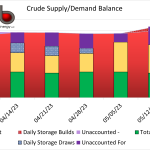
Crude oil imports dropped by more than 1 MMb/d, and exports rose by 250 Mb/d, dragging net imports down by 1.25/MMbbl to 1.3 MMb/d, according to the EIA's Weekly Petroleum Status Report (WPSR), released today. Production increased by 100 Mb/d to 12.3 MMb/d, and net refinery demand rose by 100 Mb/d to 16.1 MMb/d, as the amount of unaccounted for crude oil dropped to 450 Mb/d. This doubled the total supply deficit to over 17 MMbbl for the week, resulting in a massive 12.5 MMbbl commercial storage draw. This, combined with the loss of 11 active oil rigs in the U.S. last week—the largest weekly non-weather-related loss since Covid struck in April 2020—marks the most bullish WPSR in weeks.
Featured Articles


- Blog
The Rise and Fall of Crude Supply - Shale Crude Production, Inventories and Imports
It looks like a combination of shale crude oil production and inventory drawdowns have been backing out crude oil imports over the past two months. Gulf Coast refineries are leading the way to crank up utilization, increase diesel exports and pull crude oil inventories down from the stratosphere. A lot of this activity seems to be bypassing Cushing. Meanwhile the Gulf Coast is at the center of two big events this week – a tropical storm and a huge refinery fire. Today we continue our analysis of crude inventories.


- Blog
Road to Nowhere, Part 2 - Oil Prices Have Moved Lower With SPR Releases, But Production Still Lags
The swift increases in crude oil and gasoline prices that followed Russia’s invasion of Ukraine in February — and the sanctions that were implemented soon thereafter — spurred a lot of concern that the U.S. and global economies would go into a tailspin. In response, government officials here and abroad turned to their strategic reserves as a way to quickly balance the market and rein in prices while buying time for additional oil production to come online. But U.S. production growth and rig activity have hit a wall since June, when releases from the Strategic Petroleum Reserve (SPR) started to pick up steam, reducing the prospects for a significant output increase this year. In today’s RBN blog, we examine the changes in the market since the major withdrawals were announced, how the hoped-for bridge to higher oil production has so far failed to materialize, and why it’s unlikely the government will turn to the SPR if prices spike again soon.


- Blog
Shake, Rattle and Roll - Oklahoma Earthquakes and Risks to the Crude Oil Hub at Cushing
In 2015, Sooners held on tight as Oklahoma was rocked by 890 earthquakes with a magnitude of 3 or higher—up sharply from only 43 earthquakes in 2010 and an average of less than two earthquakes per year in the previous quarter-century. Oklahomans have experienced hundreds of earthquakes this year too, including a record-breaking 5.8 event on September 3 and, on November 6, a 5.0 quake very near Cushing, OK, which serves as the delivery point for the CME/NYMEX Light Sweet Crude contract and which has earned the nickname “Pipeline Crossroads of the World”. Today we look at the latest quake near Cushing and other recent pipeline disruptions to assess the resilience of critical crude-delivery systems.
