On Tuesday, the Biden administration revealed plans to triple the nation’s nuclear power by 2050 to achieve carbon-free energy.
In the new roadmap, the U.S. intends to add 200 GW of nuclear energy by constructing new reactors, restarting shut-down reactors, and upgrading existing reactors. In the short term, the White House aims to have 35 GW of new capacity in over a decade in the report titled, "Safety and Responsibility Expanding U.S. Nuclear Energy: Deployment Targets and a Framework for Action November 2024.”
The U.S. has the world’s largest operating fleet, with 94 reactors at 54 sites across 28 states, but it’s also among the world’s oldest. The report shows that most reactors began operations in the 1970s and 1980s. Thirty reactors have licenses that will expire before 2035, and the plan calls for renewing these licenses and identifying which reactors could operate beyond 80 years and to 100 years.
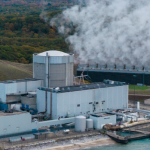
This plan includes efforts to restart the Palisades plant in Palisades, MI, (see photo) which we detailed recently in Coming Back to Life. The Department of Energy (DOE) has issued a $1.52 billion loan guarantee to help Holtec International finance the restoration and resumption of service at the 800-MW reactor. This plan could change when President Trump becomes president in January, but nuclear power is one topic that has bipartisan support.