This year there’s been unprecedented forward momentum for LNG development. Since 2022 began, two U.S. projects have reached a final investment decision (FID), with a third expected to reach that milestone in early 2023. Offtakers have committed to 38 metric tons per annum (MMtpa), or 4.9 Bcf/d, of long-term LNG contracts from these and other proposed terminals this year and there’s another handful of U.S. projects with a realistic shot at FID in the next year or so, not to mention others in Mexico and Canada. Progress on the LNG front has been dominated by three companies: Cheniere, Sempra and Venture Global. While there are other projects inching closer to FID, those from the proven LNG developers — our “three kings” — have leapfrogged to the front of the line. In today’s RBN blog, we look at what those three have under development and what it means for everyone else trying to build LNG export capacity.

If we’re talking about the kings of U.S. LNG, we have to start with Cheniere. It first announced plans to export LNG from its Sabine Pass import terminal back in 2010 (light-green diamond in Figure 1, top line in Figure 2); two years later, the company took FID and began construction on the first and largest export terminal in the Lower 48. At 30 MMtpa, or about 4 Bcf/d, it’s double the size of anything else currently in operation in the U.S. Cheniere added Corpus Christi (dark-green diamond in Figure 2) to its portfolio in 2018 and it now has 45 MMtpa (~6 Bcf/d) of LNG export capacity in operation, making it the largest exporter in the U.S. and the second-largest in the world, with only QatarEnergy producing more LNG. Cheniere is also one of two companies to take FID on an LNG export project in the U.S. this year. The company in June gave the green light to Corpus Christi Stage III, which will add 10 MMtpa (~1.3 Bcf/d) of mid-scale modular LNG export capacity directly adjacent to the existing Corpus Christi terminal (see Jump In The Line, Part 2). Stage III will have its own pipeline, storage and liquefaction processes but will share marine infrastructure with the existing terminal.

About the song
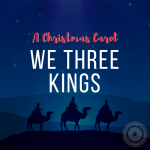
“We Three Kings,” also known as “Three Kings of Orient” and “We Three Kings of Orient Are,” is a Christmas carol written by John Henry Hopkins Jr. in 1857. Hopkins wrote the carol for a Christmas pageant held in New York City while he was serving as the rector at Christ Episcopal Church in Williamsport, PA. The lyrics center around the Biblical verse in Matthew 2:1, describing the Biblical Magi who visited Jesus as a child, bringing gifts of gold, frankincense, and myrrh. Hopkins composed both the lyrics and the music for the carol. It was described in the Oxford Book of Carols, published in 1928, as “one of the most successful of modern composed carols.”
The carol is still popular among current choral groups during the holiday season and can be heard at Christmas Eve services around the world. Some popular musical artists who have recorded the song over the years are Ramsey Lewis, Burl Ives, Dolly Parton, Anne Murray, The Beach Boys, Blondie, and Rod Stewart with Mary J. Blige.