
- Blog

Up Against the Well, Roughneck Mudder: Drilling Fluids and the Shale Revolution

A quarter million dollars for mud?  Mud for a single horizontal well can cost that much and more.  As horizontal well laterals keep getting longer, they need that much more mud.   So the $10 billion drilling mud fluids business is growing fast.  The industry has a unique supply chain, with production, storage and distribution infrastructure that rival other aspects of the oil & gas drilling business.  But you don’t hear a lot about mud.  It is one of those unsung heroes of the shale revolution, getting little attention in industry press or the investment community. But producers know they can’t do their job without just the right mud formula.  Today we begin an in depth look at drilling mud fluid and its importance to shale drillers.

- Blog

Changes in Longitudes — More Barriers to Ethane Exports

Author Housley Carr

With U.S. ethane prices low and ethane rejection expected to continue increasing, interest in exporting liquid ethane is ramping up. But there are significant barriers to these exports, including: (1) loading and unloading terminal infrastructure, (2) shipping, (3) pricing, and (4) petrochemical demand.  We examined the first two of these barriers earlier this week.  Today we wrap up this blog series, examining pricing and demand.

- Blog

Changes in Longitudes — The Four Barriers to Ethane Exports

Author Housley Carr

It is a familiar refrain in the shale era.  The U.S. produces more of a hydrocarbon commodity than it can use.  This time we are talking ethane, a natural gas liquid that is experiencing production constraints mostly due to the inability of U.S. petrochemical plants to use more of the feedstock. So why not just export the surplus?  Unlike crude oil there are no legal constraints on exports.  Unlike natural gas, you don’t need a $10 billion plant to convert it to a liquid (LNG) – ethane is already a liquid.   Unfortunately for many ethane wannabe exporters, ethane has its own infrastructure and market issues that must be resolved before it can be shipped overseas in significant quantities. Today we continue our blog series on the feasibility of overseas ethane exports.

- Blog

Bushy Eyebrows and Climate Change - And Now, a Few Minutes with Keith Bailey

Author Keith Bailey

Rusty’s Introduction

As a general rule here at RBN, we try to avoid hot button issues like environmental policy.  We have good friends on all sides of these issues, so our practice has been to steer clear of debates where the relationship between facts and outcomes can be subject to so much interpretation.  However, today we make an exception for a blog by Keith Bailey, a highly respected leader in our industry who serves on the boards of MarkWest Energy, Aegis Insurance Services, Cloud Peak Energy, Apco International Oil and Gas, and by the way, was CEO of The Williams Companies when I worked for that company more than a few years back.   Today Keith contemplates the issue of climate change from the vantage point of someone who has been around the track in energy markets and thinks deeply about the big picture issues.

- Blog

New York New York - Start Spreading the Sparks

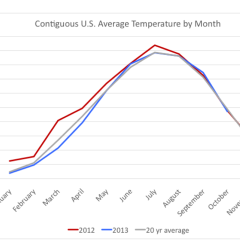
<p>We just finished up the hottest July on record. Very high temperatures cause air conditioning demand to go ballistic. System operators struggle to generate enough power to satisfy peak load and call on expensive “peaker” generation units that set a high market price for power.</p>

- Blog

A Hunk a Hunk of Burning Gas – Will Natural Gas Power Demand Keep The Lid on Storage?

Today the Energy Information Administration (EIA) publishes weekly US natural gas storage numbers for the week ending July 6, 2012. Last week EIA reported 39 Bcf injections making the total storage 3,102 Bcf. The natural gas stockpile is now 602 Bcf higher than this time last year but the rate of storage injection has slowed as a result of increased demand for natural gas burn by power generators. In today’s blog we look at the supply demand picture to see what is driving higher natural gas burn by power generators and the implications for storage.

- Blog

Under the Weather – Cooling Degree Days, Natural Gas Storage and Price

With natural gas storage at record levels in early June, it looks like it’s going to be a long summer for gas producers hoping for better prices. The most important factor will be hot weather, or lack thereof.   Temperatures this summer will have a significant impact on how much of that gas in storage is put to use for electric power generation. In today’s blog we’ll work through the degree day numbers and explain how a milder than usual summer could impact storage levels.