
- Blog

I’ll Take You There—Moving NGLs Out of the Permian and Eagle Ford

Author Housley Carr

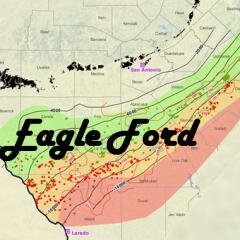
Production of natural gas liquids in the liquids-rich Permian Basin and Eagle Ford has been rising even more quickly than had been predicted a year or two ago. That’s put renewed pressure on midstream companies to further increase the natural gas processing and NGL take-away capacity from the two prolific “triple-plays”—which are favored by producers for their ability to generate large volumes of crude oil and natural gas as well as NGLs. Assessing the existing and planned NGL-related infrastructure of the Permian and the Eagle Ford is the focus of our new series, “I’ll Take You There”. In our opening episode, we consider what’s driving NGL production growth—and the need for new processing and pipeline capacity--in two of the most important US production regions.


- Blog

How Rich is Rich? – Gas Processing Economics Part 3: Computing NGL Quantities

Natural gas processing plants are being built or expanded at a feverish pace.  At least 90 projects are in the works around the U.S., expected to add more than 15 Bcf/d of capacity according to the latest Bentek NGL Facilities Databank numbers.  How do the economics of these investments work? We know that it is a lot more complicated than a simple frac spread.  But does that mean the calculations must be exclusively the purview of engineers armed with gas plant optimization models?  Heck no.  Anybody, even an MBA with a spreadsheet, a few standard factors and a gas analysis can figure out how a gas processing plant makes money.  So to prove that point today we’ll dive one more time into natural gas processing economics to understand how the composition of an inlet gas stream is converted to outlet streams of natural gas liquids and residue gas.

- Blog

Lumpy - Soaking Wet – Moving Fast – that’s Eagle Ford NGLs?

This is how midstreamers at the Platts conference talk about the Eagle Ford?  Sounds more like a description of my wife’s Havanese after a bath than a description than one of the most prolific NGL plays on the continent.  But these weren’t really complaints.  It was just midstreamers pointing out some of the challenges of life in the Eagle Ford NGL business, circa 2012.  And of course, these are certainly white collar problems.  This is another blog based on presentations at the Platts Midstream conference.  Today we’ll look at each of the three issues from the title and pick a couple of examples of solutions and strategies being used by players in the South Texas area.