
- Blog

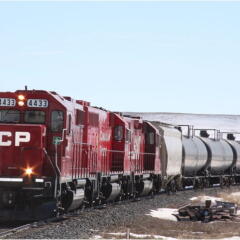
Could New Tank Car Rules Derail the Bakken Crude Boom?

The recent tragic spate of four rail accidents involving crude-by-rail, three of them carrying crude from North Dakota, have increased pressure for regulation of rail tank car standards. The railroad industry- through the Association of American Railroads (AAR) - proposed improved safety standards in 2011 for tank cars carrying hazardous materials including crude oil. These standards have been adopted by US tank car builders and were mandated this week by the Canadian Government for new tank car construction. If the new standards applied to all existing tank cars then at least 75,000 cars manufactured before 2011 would require retrofitting. Today we examine the impact hastily implemented new regulatory requirements might have on Bakken crude oil takeaway.

- Blog

Float, Float On – Crude Oil Barge Volumes Continue to Surge

Barge shipments of crude oil between the Midwest Petroleum Administration Defense District (PADD) 2 and the Gulf Coast PADD 3 regions reached 126 Mb/d in July 2013 - up 79 percent over the same month last year according to the Energy Information Administration (EIA).  The Port of Corpus Christi reported that coastal barge and tanker movements of crude from the Eagle Ford – mostly headed out of Corpus to Houston or St James, LA are up 37 percent so far this year (August) to 387 Mb/d. The crude tank barge trade is booming as producers continue to use waterborne transport to bypass pipeline congestion. Today we look at emerging waterborne crude routes to market.

- Blog

West Coast NGLs – The Wild West of Natural Gas Liquids Markets

The West Coast natural gas liquids (NGL) market is an island unto itself. Unlike the world east of the Rockies where pipelines link together producing and consuming regions, the West Coast NGL market is marooned except for rail tank cars and a few waterborne cargos.  It is a fiercely independent market with its own unique players playing their own ballgame.  But like the rest of the NGL world, big changes are rippling through that market.  Today we begin a series looking at those changes and how West Coast NGLs are likely to evolve over the next few years.