
- Blog

Johnny B. Goode - Capital Discipline Resurrected E&Ps; Could Producers Now Backslide to 'Drill Baby Drill'?

Growth for growth’s sake. In the early years of the Shale Revolution, that’s what it was all about. Backed by billions of dollars in Wall Street borrowings, E&Ps plowed vast piles of cash into increasing production. It was the era of “Drill baby drill!” And we all know what happened next. Rabid production growth contributed to oversupply and crude oil prices crashed. But resilient E&Ps clawed their way back by adopting what we now know as capital discipline, initially in fits and starts. Then, after the COVID price meltdown, they went all-in, elevating free cash flow generation to Job #1 and returning a significant portion of cash flow to shareholders. It worked! Financial markets started to think of E&Ps more as yield vehicles than growth plays. But it is in the DNA of oil and gas producers to grow. And now that U.S. crude prices are above $85/bbl, could we see a backslide toward organic growth — a 2024 rendition of “Drill baby drill”? In today’s RBN blog, we’ll explore the historical context of E&Ps’ transition to capital discipline and what it tells us about what’s coming next. 

- Blog

I Can't Go for That (No Can Do), Part 2 – E&P Capex and Production Guidance, and Why They Aren't Doing More

There’s a lot of confusion out there — both in the media and the general public — about how producers in the U.S. oil and gas industry plan their operations for the months ahead and the degree to which they could ratchet up their production to help alleviate the current global supply shortfall and help bring down high prices. It’s not as simple or immediate as some might imagine. There are many reasons why E&Ps are either reluctant or unable to quickly increase their crude oil and natural gas production. Capital budgets are up in 2022 by an average of 23% over 2021. That increase seems substantial, but about two-thirds (15%) results from oilfield service inflation. And there are other headwinds as well. In today’s RBN blog, we drill down into the numbers with a look at producers’ capex and production guidance for 2022, the sharp decline in drilled-but-uncompleted wells, the impact of inflation and other factors that weigh on E&Ps today.

- Blog

I Can't Go for That (No Can Do) - Why U.S. E&Ps Have Been Slow to Ramp Up Crude Oil Production

Author Housley Carr

Getting by without a few million barrels a day of Russian crude oil won't be easy for the global market, but it's gotta be done. One way to help ease the supply shortfall would be for U.S. E&Ps to ramp up their crude oil production, but the oil patch's output has remained close to flat — so far at least. Why aren't producers jumping in? Are the Biden administration’s policies and mixed messages on hydrocarbons putting the kibosh on production growth? Is it a scarcity of completion crews, or pipes or frac sand? Perhaps it’s worries that increasing production would send oil prices sliding and hurt producers’ bottom lines? Or is it all about ESG and the shift by many large investment funds and banks away from anything related to fossil fuels? Possibly all of the above? In today’s RBN blog, we look at what’s really behind the snail’s pace of U.S. crude oil production growth.

- Blog

Breakout! - Oil, Gas and NGLs from the Permian - RBN Announces PermiCon 2018

There has never been anything like the 2018 Permian Basin. In just five years, oil production has tripled, gas production has doubled and NGL output is up about 2.5 times. Crude oil pipelines out of the Permian are filled to the brim and the differentials between crude in Midland and both the Gulf Coast and Cushing have blown out. It is the same for natural gas, with pipe capacity nearly maxed out and basis wide. So far, most Permian NGLs have avoided a similar traffic jam in the local market, only to run into constraints downstream. But the overall Permian market is headed for a breakout! Massive infrastructure development is coming to the basin and the takeaway capacity constraints will be history — at least for a while. What will this mean for the Permian market, and for that matter, for markets across North America and the globe? Clearly, we need to get the major players together under one roof and figure it out. And that’s just the plan for PermiCon 2018. Our goal for this unique conference is to bridge the gap between fundamentals analysis and boots-on-the-ground market intelligence. Warning! Today’s blog is an unabashed advertorial for our upcoming conference.

- Blog

Can’t Get Next to You – More Propane Supply in the Right Places – The Model

Most of the increase in U.S. propane production in recent years has come from plants processing natural gas to extract natural gas liquids (NGLs). The rich (wet) gas those plants process is either produced with crude as associated gas or from wet gas wells that target NGLs. In either case propane supplies are produced regardless of U.S. demand – and that demand is relatively static although subject to significant weather related seasonal variation. There are two important consequences of this supply/demand imbalance with important implications for the propane market.  First, the U.S. can produce about twice the propane it needs, so the surplus must be exported.  Second, most production growth is next door to the largest propane demand regions in the country. Today we describe the scenarios used to build our model of propane supply and demand used to analyze these developments.

- Blog

We Heard it Through the Eaglebine – New Takeaway Capacity Heralds Production Growth

Located just east of the prolific Eagle Ford shale, production from the Eaglebine play has yet to take off. In good part that is because takeaway capacity is currently limited to trucks. All that is about to change with the new 60 Mb/d Sunoco Logistics Eaglebine Express pipeline due online by the end of 2014. And last month two midstream companies announced competing pipeline projects that would add as much as another 400 Mb/d of takeaway capacity in 2016. Today we review recent developments in the Eaglebine basin.

- Blog

Big Surge Comes to Whoville – Northeast NGLs to Increase Six Fold

Author Kelly Van Hull

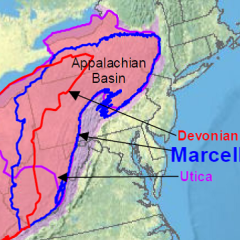
A few months back we introduced Whoville, the emerging NGL hub in a small corner of Pennsylvania and West Virginia.  Now that hub is coming on like gangbusters.  Between now and 2015 nearly 4.7 Bcf/d of additional cryogenic natural gas processing capacity is due to come online along with 500 Mb/d of fractionation capacity and 500 Mb/d of NGL pipeline takeaway capacity to support growing Utica and wet Marcellus production.  As a result, NGL production from the Northeast is due to exceed 400 Mb/d by 2015, a six fold surge from EIA’s 63 Mb/d February production number.  In today’s blog, we examine growing Northeast NGLs production.