
- Blog

Down To The River: Crude By Barge Traffic Along the Gulf Coast

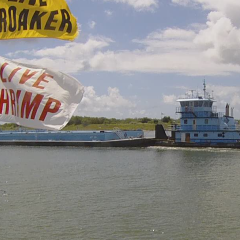
Waterborne crude shipments out of the Port of Corpus Christi are still growing this year – averaging 700 Mb/d as of May 2015. A veritable armada of barges and tankers has converged on South Texas to help move all that crude. A large part of the shipments are on small inland tank barges plying the Gulf Intracoastal Waterway (GIWW) - a 65 years old canal system that forms a vital backbone for Gulf Coast refiners. Today we describe the changing profile of barge shipments along the Gulf of Mexico.

- Blog

Rock The Boat - Don’t Rock the Boat - The Jones Act Coastal Trade

In December 2013 US Midstream giant Kinder Morgan agreed to spend nearly $1 Billion to get into the oil tanker business by buying two companies that own 5 US registered “Jones Act” vessels and are in the process of building 4 more. These tankers are part of an exclusive fleet of just 42 self propelled ocean going vessels that deliver oil or refined products between US ports. Booming US crude production along with constrained onshore delivery infrastructure have increased demand for tankers that can ship oil along coastal waters. Long-term charter rates for these tankers jumped to over $100,000/day in 2013 compared to an average of $56,000/day in 2012.  Today we begin a blog series looking at the US flagged tanker fleet and plans to expand it by 35 percent in the next 2 years.

- Blog

Sittin' On The Dock of the Bay – Watching Eagle Ford Roll In

The volume of crude moving out of Corpus by barge and tanker increased from 7 Mb/d in January 2012 to 370 Mb/d in May 2013. At the same time two 300 Mb/d plus pipelines from the South Texas Eagle Ford to Houston are running at less than half full. We know these stats because of information from a company called Clipper Data, which among other things provides detailed waterborne movements of Eagle Ford crude from the Port of Corpus Christi to Gulf Coast destinations. Today we examine the shipping data for clues.