Eagle Ford crude production is close to 600 MB/d. Midstream infrastructure projects are springing up left, right and center to deliver this production to refineries. Today we discover how just two of the seven takeaway pipeline projects built or getting built this year to deliver Eagle Ford crude to the Gulf Coast will have more than enough capacity to deliver current production.
In the first episode of this series (see Part I) we covered Eagle Ford production and the advantageous pricing that producers in the region can obtain compared to their brethren in the Bakken.
Routes to Market
Eagle Ford oil production is located across a wide stretch of South Texas roughly centered in Karnes County, southeast of San Antonio and about 75 miles north of the Port of Corpus Christi (see the map in Part I). Geographically the two logical routes to get crude to market from the region are either to travel 180 miles due East to the Houston area or 75 miles due south to Corpus Christi. Houston offers instant access to a ready-made pipeline network linking 4 MMB/d of refining capacity. Corpus has 3 refineries, Flint Hills: 300 MBls/d, Valero: 205 MBls/d,
CITGO: 165 MBls/d and provides waterborne access to the rest of the Gulf Coast refining complex.
In all there are seven significant crude and condensate pipeline projects built or planned to be complete by the end of 2013 that follow one or other of these two routes. Once this infrastructure is complete it will provide an estimated 1.8 MMB/d of takeaway capacity. Production estimates suggest that it will be at least 2016 before that entire infrastructure is required.
As we learned in Part I, condensate requires different treatment and handling to crude oil. What is not yet clear from the data is what percentage of the Eagle Ford “crude” production that each midstream company is taking to market will be condensate.
Today we detail two of the largest pipeline projects – one to Houston and one to Corpus - built respectively by Enterprise and Koch. We will cover the remaining infrastructure projects in future blogs in the series.
Enterprise Product Partners L.P.
Enterprise is the largest publicly traded MLP in the US. The company is a leading midstream asset owner deriving the majority of its revenue from transportation, processing and storage fees. As noted in our series on Mont Belvieu (see Can Mont Belvieu Handle the NGL Supply Surge Part I) Enterprise is one of the Big Four players in the Mont Belvieu natural gas liquid (NGL) market. In addition to crude and condensate, Enterprise has significant infrastructure assets associated with natural gas, gas processing and NGLs in the Eagle Ford.
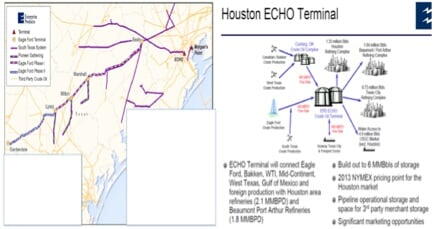
Map 1 Source: Analyst Presentation Map 2 Source: Analyst Presentation
Enterprises’ principal crude oil takeaway asset in the Eagle Ford is a brand new 147 mile 24 inch diameter pipeline from Lyssy TX to Sealy TX that has the capacity to move 350MB/d of crude (see map 1 above left). Lyssy is in the eastern part of the Eagle Ford oil window. Phase 1 of the pipeline began accepting deliveries on June 7, 2012. The pipeline terminates in Sealy, about 50 miles west of Houston. At Sealy the pipeline links into the company’s existing Rancho Pipeline which ties directly into the Gulf Coast refinery complex and the Enterprise Crude Houston (ECHO) oil terminal (see map 2 above right).
ECHO is clearly shaping up to be an “über” crude storage and trading hub linking to supplies from Cushing (via the Seaway reversal), refinery complexes along the Houston Ship Channel, in Texas City, in Port Arthur, and by water to St James LA area refineries. ECHO provides crude shippers with direct pipeline access to approximately 4 MB/d of refining capacity. The ECHO terminal is not yet officially open (it is supposed to open this month – July 2012). Eagle Ford crude is however believed to be already moving through the Eagle Ford Pipeline and into the Houston area on the Rancho pipeline.
Phase II of the Eagle Ford Crude Oil System extends the pipeline 80 miles further west from Lyssy to Gardendale in La Salle County. That second phase has an expected completion of Q1 2013. Chesapeake has announced a 10-year, 100,000 b/d shipping agreement with Enterprise Products Partners for capacity on the Phase II extension.
Koch Pipeline
Koch Pipeline Company, L.P. (KPL) is a subsidiary of Koch Industries, one of America’s largest private companies. (For you non-energy types, Koch is pronounced like the soft drink –‘Coke’). KPL operates crude oil pipelines that deliver to refining centers in the Midwest and Texas as well as refined product and NGL pipelines. KPL operates in the Eagle Ford in close partnership with its sister company Flint Hills Resources. Flint Hills owns a 300MB/d oil refinery in Corpus Christi on the Texas Gulf Coast. KPL operates the South Texas crude pipeline system that moves domestic crude from the Midwest to Corpus Christi.
KPL has the advantage of owning existing infrastructure feeding the Flint Hills refinery in Corpus Christi. KPL strategy appears to be to develop partnerships with producers such as Anadarko and crude oil gathering systems such as Arrowhead to deliver significant crude and condensate volumes into Corpus.
The Arrowhead gathering system (operated by Harvest Pipeline) serves the western Eagle Ford production area of Frio, LaSalle, McMullen, and Live Oak counties and that crude is gathered into an existing storage terminal at Pettus in Bea County, TX. KPL is also gathering crude from the eastern Eagle Ford region by truck to a new terminal near Helena that will be linked by a 24 mile 16 inch pipeline to Pettus due to complete in Q4-2012. From Pettus KPL is able to ship 30MB/d south to Corpus via an older existing pipeline leased from Nustar. KPL is also currently constructing a new 20-inch Pettus to Corpus pipeline to be completed in mid 2012 with 250,000 barrels per day capacity (see red line on map). With this new pipeline and through gathering
agreements with other companies, KPL will be able to deliver 350 MB/d into Corpus Christi by the end of 2012.