The production economics of the crude oil-focused SCOOP and STACK plays in central Oklahoma are among the best anywhere—in fact, only the Permian Basin’s numbers outshine them. But, as in the Permian, crude production in SCOOP and STACK can only grow if sufficient midstream infrastructure is in place to process and take away all of the associated natural gas the wells there produce. Processing and takeaway constraints aren’t big issues in SCOOP/STACK yet, but they will be soon. Today we discuss highlights from RBN’s new Drill Down Report on production growth and looming infrastructure constraints in two of the U.S.’s most promising shale plays.
The South Central Oklahoma Oil Province (SCOOP) and Sooner Trend Anadarko Canadian Kingfisher (STACK) plays in central Oklahoma have emerged as two of the most prolific and attractive shale producing regions in the U.S. The SCOOP/STACK region is much smaller than the Permian in West Texas and southeastern New Mexico, but the plays have similar characteristics. For one, SCOOP and STACK, like the Permian, are primarily oil plays but with significant volumes of associated gas and natural gas liquids (NGLs); further, they have very attractive producer economics in core areas, as well as resilient and increasing rig counts in those areas. And they share a robust outlook for future production. All that means 1) that more midstream infrastructure will be needed to support the production growth, and 2) that if new capacity isn’t added fast enough, takeaway capacity constraints could result in dire consequences for commodity prices within the region.
The potential for natural gas takeaway constraints resulting in the curtailment of drilling programs is a big deal for producers in plays like the SCOOP and STACK where the attractive production economics are heavily dependent on crude oil production. The gas comes out of the ground with the oil, and must be processed to extract NGLs and moved to market via pipeline or the oil cannot be produced. No producer wants to be placed in the position of cutting back an attractive oil development program because there is not enough processing and pipeline capacity to get their associated gas to market.
About the song
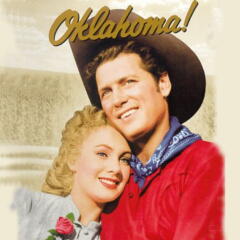
“Oklahoma!” is one of the best-known, longest-running Broadway musicals of the 20th century. Based on a 1931 play (“Green Grow the Lilacs”) by Sooner State native Lynn Riggs, the 1943 musical was written by composer Richard Rodgers and lyricist Oscar Hammerstein II, the most successful partnership in Broadway musical theater history. (They also wrote “The King and I,” “South Pacific” and “The Sound of Music.”) Rodgers and Hammerstein were both born and raised in New York City and lived there and on farms in Connecticut and Pennsylvania; neither set foot in Oklahoma until the musical’s national tour came to Oklahoma City in 1946. The musical’s title song became Oklahoma’s official state song in 1953, despite objections by some that it had been written by Yankees. Two years later, a movie version of “Oklahoma!” was released—it was a hit too.