The margin for producing ethylene by steam-cracking ethane has been less than a dime per pound since mid-March 2018, and less than a nickel for nearly nine of the past 15-and-a-half months. In fact, for two weeks last September, the ethylene-from-ethane margin fell below zero. And yet, a joint venture of two of the world’s savviest companies — energy giant ExxonMobil and petchem behemoth Saudi Basic Industries Corp., or SABIC — recently committed to building what will be the world’s largest ethane steam cracker: a 4-billion-pounds/year facility to be constructed near Corpus Christi by 2022. Is this a case of blind optimism? No, not when you factor in the cracker’s location, the JV’s concurrent plan to construct two polyethylene plants and a monoethylene glycol plant right next door, and the co-developers’ global market reach. Today, we discuss the thinking behind ExxonMobil and SABIC’s big investment in Texas’s San Patricio County.
The Shale Revolution and the resulting rise in U.S. production of crude oil, natural gas and natural gas liquids (NGLs) have been the catalyst for many things. Refinery retrofits to allow more light-sweet shale crude to be processed. Liquefaction plants and LNG export terminals — new crude and LPG export infrastructure too. A slew of new natural gas-fired power plants, accelerating the retirement of coal generators. And, as we’ve discussed at least a few times in the RBN blogosphere, a long list of new, mostly ethane-only steam crackers — almost all of them along the Gulf Coast — to take advantage of the humongous volumes of ethane and other NGLs emerging from wells in the Permian, Eagle Ford, SCOOP/STACK, Marcellus/Utica and other shale plays.

Canadian crude output is rising, requiring new export routes. As traditional pathways face constraints, the U.S. Rockies—especially the Guernsey, WY hub—are emerging as key corridors for moving Canadian heavy crude to downstream markets, including the Gulf Coast.
We’ve discussed the planning and buildout of a new generation of steam-cracking capacity in a number of blogs, including in our Ethane Asylum Revisited series. There, we explained that the now more than 40 stream crackers in the U.S. (capacity totaling 76 billion pounds/year as of May 2019) “crack” a variety of feedstocks (ethane, propane, butane, naphtha, gas oil) to produce ethylene as well as smaller volumes of propylene and other useful products. More than half of the plants are designed to crack specific feedstocks (mostly ethane or ethane and propane), while the others can switch between feedstocks to maximize their profitability — a function of the prices of feedstocks (ethane, propane, normal butane, etc.) and products (ethylene, propylene etc.), and the volumes of ethylene and other products that various feedstocks produce (see You're the One That I Want for more about petrochemical feedstock selection). All but a handful of these crackers are located along the Gulf Coast, in large part because of the region’s abundant and generally lower-cost sources of feedstocks and natural gas, its proximity to import and export terminals, and the fact that a number of key locations along the Gulf Coast sit above underground salt formations that could be — and in many cases have been — developed into huge storage tanks for both feedstocks and petchem products.
About the song
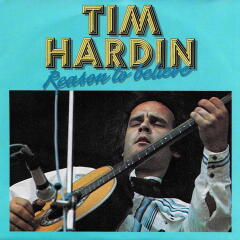
"Reason to Believe" was written by Tim Hardin and appears as the first cut on side two of Hardin's debut album, Tim Hardin 1. The album was released in July 1966, and was produced by Erik Jacobson, who also produced The Lovin' Spoonful and discovered Hardin. Lovin' Spoonful member John Sebastian appears on Hardin's first album, playing harmonica. Personnel on the record were: Tim Hardin (vocals, guitar, keyboards), Bob Bushnell, Walter Yost (bass), Earl Palmer, Buddy Saltzman, Jon Wilcox (drums), Gary Burton (vibraphone), Phil Kraus (background vocals), and — as just noted — John Sebastian (harmonica).
The Carpenters, Bobby Darin, Jackie DeShannon and Rod Stewart also covered the song. In the case of Rod Stewart, "Reason to Believe" was the first single released from his third solo album, 1971's Every Picture Tells a Story. It went to #62 on the Billboard Hot 100 chart before its B-side, "Maggie May," started to receive more airplay — it went all the way to #1. A live version of the “Reason to Believe,” released as a single from Stewart's 1993 Unplugged...and Seated album, went to #19 on the Billboard Hot 100. Stewart's two different versions of the song logged a total of 41 weeks on the Hot 100 chart, longer than any other of his releases.
Tim Hardin (James Timothy Hardin) was an American folk musician and composer from Eugene, OR. His best known song was "If I Were a Carpenter," which appeared on his second album, Tim Hardin 2. Many artists covered this song, including Joan Baez, Small Faces, Bob Seger and Chicken Shack. Bobby Darin, The Four Tops and Johnny Cash all had charted hits with the song. Hardin performed "If I Were a Carpenter" at the original Woodstock Music Festival in 1969, but none of his performances appeared in the film or original soundtrack of the event. The song would later be included in the 1994 Woodstock box set. Hardin would release 10 albums during his career, and another 11 albums have been released posthumously. He died in Hollywood, CA in 1980.