The surge in crude oil, natural gas and natural gas liquids (NGL) production in the Permian is driving a massive buildout of midstream infrastructure designed to move the hydrocarbons to end-use markets. On the gas processing front, there are literally dozens of projects announced or in the planning phase that are scheduled to start up over the next two years. Some are small projects aimed at a few producers, while others are set to significantly expand processing capacity and affect large areas of the basin’s gas gathering and transmission network. Today, we discuss Vaquero Midstream’s ambitious Delaware Basin gathering and processing projects.
We last looked at Permian gas gathering and processing infrastructure in Part 3 of our Waha Hub blog series, “It Was Good Living With You, (W)aha.” In that blog, we reviewed the Agua Blanca pipeline and how it fits in with the development of more than 5 Bcf/d of natural gas processing capacity in the basin. Keeping up with the myriad of infrastructure changes taking place in Permian midstream is a challenge, so we never miss a chance to dive deeper into the key projects underway in the basin. Today, we look at another intra-basin pipeline built to aggregate large quantities of gas to Waha: Vaquero’s Lariat pipeline and the associated Caymus processing facility.

The NATGAS Appalachia weekly report provides the data and insights to monitor the northeast natural gas market’s twists and turns and identify the risks and opportunities along the way, including tracking supply-demand trends, outbound capacity and their impact on takeaway pipeline utilization, and regional prices.
Vaquero (from the Spanish for cowboy and horse training where building willing partners is paramount) is a private-equity funded midstream company formed to develop natural gas gathering and processing assets in the Permian. Its first project is located within the central and southern Delaware Basin, and it’s a big one. The company’s midstream assets span 100 miles in Texas’s Reeves, Loving, Ward and Pecos counties and include all the essential pieces needed to gather and process a portion of the rich natural gas being produced in the Delaware Basin as a byproduct of oil-directed drilling. The Vaquero system is shown in Figure 1 and consists of the following infrastructure:
- Rich gas gathering pipelines and the 24- and 30-inch-diameter Lariat gathering pipeline (long brown line), capable of transporting 1.0 Bcf/d and expandable with future compression;
- Caymus I, a 200-MMcf/d cryogenic processing plant (green square) at Waha (northwestern Pecos County) that came online in 2016;
- Caymus II, a 200-MMcf/d cryogenic processing plant (green square) scheduled for completion in the first quarter of 2018;
- Enough acreage at Waha to expand processing capacity to over 1 Bcf/d;
- The 16-inch-diameter Riata natural gas residue pipeline (blue line to lower right) that connects Caymus to multiple gas pipelines at the Waha Hub; and
- The 12-inch-diameter Pistolero NGL pipeline (short orange line to lower right) from the Caymus facility that connects to Enterprise Products Partners’ Chaparral Pipeline and Energy Transfer Partners’ Lone Star NGL pipelines (Lone Star Express and Lone Star West Texas Gateway).
About the song
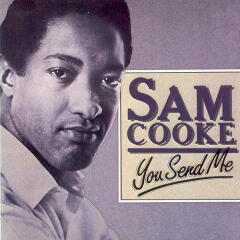
"You Send Me" was written by Sam Cooke. It was released as a single in September 1957 and went to #1 on the Billboard Hot 100 Singles and Hot R&B Singles charts. The song was recorded at Radio Recorders in Hollywood in June 1957, with Bumps Blackwell producing. It would be the first song on side one of Sam Cooke's debut album, Sam Cooke, released in January 1958. The album went to #16 on the Billboard Top 200 Albums chart. Personnel on the record were: Sam Cooke (lead vocals), Rene Hall and Clifton White (guitar), Ted Brinson (bass), Earl Palmer (drums), and Lee Gotch and The Pied Pipers (backing vocals). Cooke first made a demo of "You Send Me" in 1955, featuring his voice and guitar accompaniment. He released the song as the debut single on the new Keen label, owned by soon-to-be Los Angeles record mogul Bob Keene. The song has been covered by many artists over the years, including Teresa Brewer, Aretha Franklin, and The Manhattans.
Sam Cooke was an American singer, songwriter, and entrepreneur. He is referred to as the "King of Soul" for his distinctive vocal stylings. Cooke began his professional career in the 1950s as the lead singer for the gospel group, The Soul Stirrers, and became a central figure in the civil rights movement, with his song, "A Change Is Gonna Come," being adopted as a pivotal song of the movement. He released 15 studio albums, two live albums, 12 compilation albums, and 50 singles. Cooke is a member of the Rock and Roll Hall of Fame both as a solo artist and as a member of The Soul Stirrers. He also is a member of the Songwriters Hall of Fame and has a Grammy Lifetime Achievement Award. Cooke died in December 1964 at the age of 33 after being shot at a Los Angeles motel under suspicious circumstances.