U.S. crude oil production has doubled in the past eight years, from 5.5 MMb/d in 2010 to a record 11.0 MMb/d this month — an astonishing 9% compound annual growth rate. But there’s more to the Shale Revolution than higher production. Its most noteworthy characteristic may be a newfound market responsiveness that U.S. production volumes have to price, in which U.S. producers flex their “sweet spots” and an at-the-ready inventory of drilled-but-uncompleted wells (DUCs) that can be ramped up when prices warrant and pulled back when they don’t. This newfound flexibility has profoundly changed the role of the U.S. in global markets. In today’s blog, we take a big-picture look at crude oil production growth, the special ability of U.S. producers to respond to shifts in crude pricing, and the potential for the U.S. to have a stabilizing role in global markets.
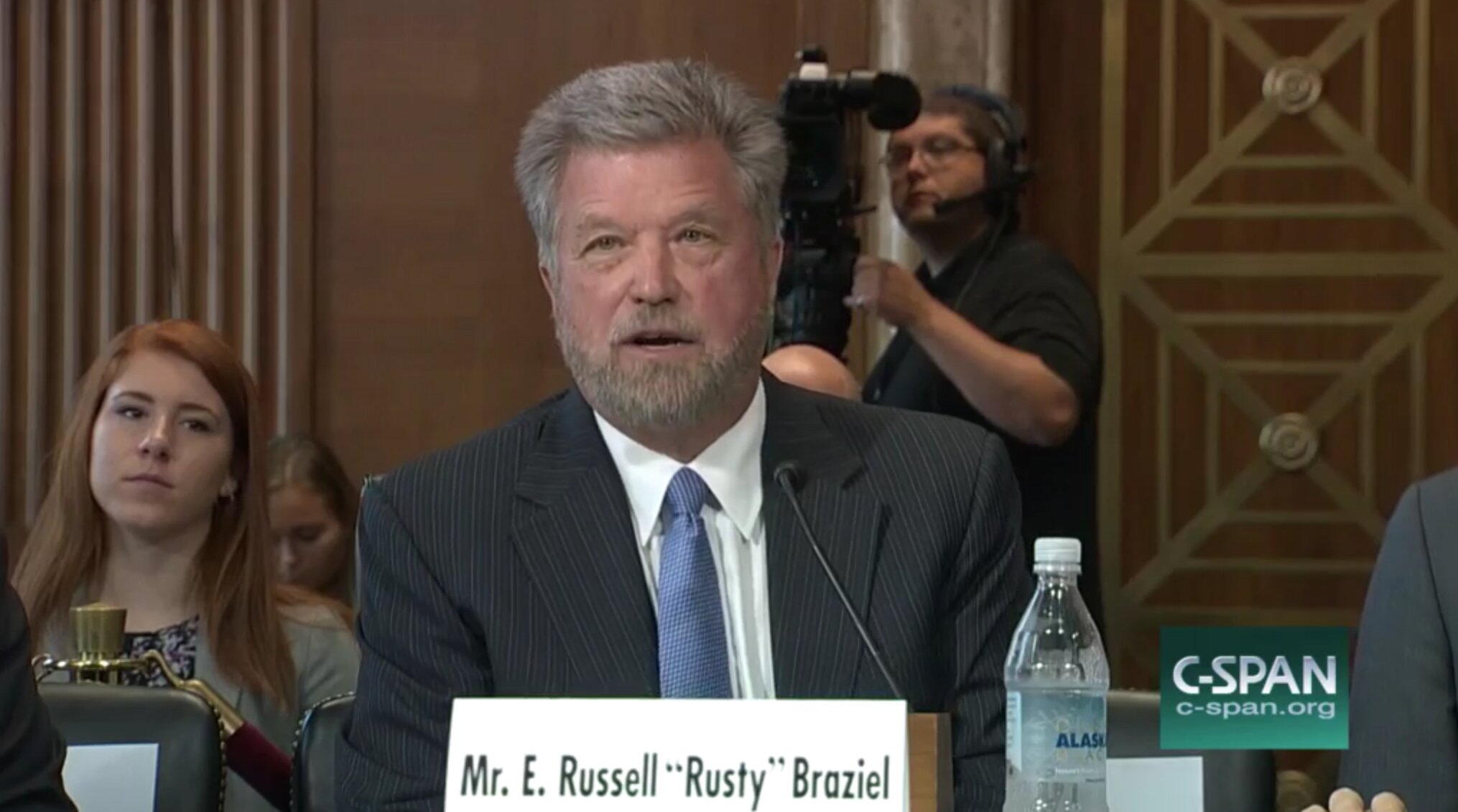
(Note: This blog is based on Rusty Braziel’s July 24 testimony to the U.S. Senate Energy and Natural Resources Committee. His written testimony is available in full by clicking here.)
Productivity improvements have radically shifted the supply curve for U.S. oil production. Today, one drilling rig can bring on anywhere from five times and 11 times as much crude oil production in a given month than a rig could do in 2011. There are a number of factors that have contributed to this remarkable advance, but two really stand out: (1) each well drilled produces far more hydrocarbons than in the pre-shale era, and (2) producers have learned to drill shale wells much more quickly. The result has been a dramatic reduction in the per-unit cost of production, which means that the marginal cost of production has come way down.
These improvements have helped push U.S. crude oil production (blue line, left axis in Figure 1) to twice what it was only eight years ago. Most of that incremental production has found its way into global markets — either directly or indirectly — and enhanced the U.S.’s role in the process. According to Energy Information Administration (EIA) data, between 2011 and 2018, imports of crude oil into the U.S. (orange line, left axis) fell by about 1.2 MMb/d, effectively displacing that volume back into non-U.S. markets. And since 2016, the U.S. has been exporting significant volumes of crude (gray line, right axis) — up from less than 50 Mb/d in 2010 (mostly to Canada) to an average of 1.8 MMb/d thus far in 2018.

About the song
"It Don't Mean a Thing (If It Ain't Got That Swing)" is a 1931 composition written by Duke Ellington, with lyrics by Irving Mills. Ellington and his orchestra released the song on the Brunswick Records label in February 1932. This version of the song was inducted into the Grammy Hall of Fame in 2008. The jazz standard has been covered by many artists since its creation 87 years ago. Ellington said the song was "the expression of a sentiment which prevailed among jazz musicians at the time." He credited the saying as being the credo of his former trumpet player, Bubber Miley.
Duke Ellington was an American jazz composer, pianist, and band leader. His active music career spanned over six decades. He was made an inductee into the Down Beat Jazz Hall of Fame in 1956, received a Grammy Lifetime Achievement Award in 1966, and in 1969, was awarded the Presidential Medal of Freedom. Ellington was the recipient of 14 Grammy Awards. He died in New York City on May 24, 1974, at the age of 75. His funeral at the Cathedral of Saint John the Divine in New York City –– the fourth largest church in the world — was attended by more than 12,000 people.