As nobody in Texas will soon forget, in February of this year freezing temperatures across the southern U.S. hammered energy markets and resulted in widespread and long-lasting blackouts across the Energy Reliability Council of Texas (ERCOT) power region. Life for many Texans came to a standstill for a week until power could be restored. The resulting economic damages have been estimated in the billions. Many people, rightfully, questioned how an energy-rich state like Texas could have been so affected. And then the blame-game started. Lacking a forum of qualified experts, productive discussions took a back seat to self-serving rhetoric, special-interest advocacy, and political posturing. But if real solutions were going to be found, it would take more than finger-pointing. It would take a meeting of experts whose primary focus was a resolution, rather than a constituency. Fortunately for Texans, that’s what they got two weeks ago. In today’s blog, we take you through the symposium and its outcome, particularly regarding the role of natural gas.
On July 15, RBN helped organize and participated in a major symposium on the February blackouts caused by a record-shattering Deep Freeze — which we discussed in Perfect Storm — and the changes needed in ERCOT. The symposium, put on by the Energy Bar Association and co-sponsored by the University of Texas Law School, was held at UT in Austin. The idea was to have a lot of informal discussions as to what happened, why it happened, what the Texas Legislature had done about it so far, and how to improve the reliability of the Texas grid in the future. We joined a really illustrious group of speakers. The roster included, either live or virtually, State Senator Charles Schertner, chairman of the Texas Senate Business and Commerce Committee; Dr. Michael Webber, well-known expert in Texas energy markets at the University of Texas; multiple ex-Public Utility Commission of Texas (PUC) chairs and commissioners; past and present ERCOT independent market monitors, and former ERCOT board members; along with a large number of legislative authorities and experts in Texas power and natural gas markets. As noted, the role of natural gas in the crisis, and what that might mean for the future, was a primary focus.

Canadian crude output is rising, requiring new export routes. As traditional pathways face constraints, the U.S. Rockies—especially the Guernsey, WY hub—are emerging as key corridors for moving Canadian heavy crude to downstream markets, including the Gulf Coast.
The symposium included an extensive review of legislation that’s already been enacted, Senate Bill 2 (SB2) and SB3, which change ERCOT’s governance and require the winterizing of power plants and critical fuel-supply facilities throughout the ERCOT grid. Then, in the ensuing discussions, a great deal of attention was paid to the absence of any legislative or regulatory avenue to prevent or at least mitigate upstream loss of natural gas supply during severe winter weather, particularly at producer wellheads. As gas is the dominant fuel for Texas power generators, and gas-fired generation is such a critical “load-following” resource — quickly dispatchable, easier to site than other types of generation, and fueled by the lowest-carbon fossil fuel — the lack of a clear approach to ensuring natural gas reliability for power generation was seen as a continuing, glaring weakness in ERCOT. One former ERCOT board member (who shall not be named) even said his preference was for the PUC to regulate the production of natural gas — meaning regulation of oil and gas companies and their markets. We politely pointed out that government regulation of natural gas production had already been tried at the national level, from 1954 to 1989, and had been an unmitigated disaster (see our recent blog Different Strokes for more on gas regulation’s history), and was responsible for most of the industry’s 45 years of dysfunction that is behind us now.
About the song
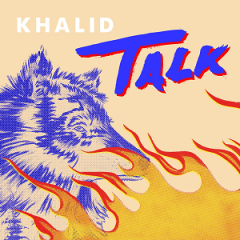
"Talk" was written by Khalid Robinson, Gary Lawrence, and Howard Lawrence. It appears as the fifth song on Khalid's second studio album, Free Spirit. With the repeated refrain of "Can't we just talk" over the funky production of the English electronic dance duo Disclosure, the song was released as a single in February 2019. It went to #1 on the Billboard Adult Top 40 and Rhythmic charts, and #3 on the Billboard Hot 100 Singles chart. It has been certified 2X Platinum by the Recording Industry Association of America (RIAA). The album featured Khalid on lead and backing vocals.
Free Spirit was produced by Digi, Charlie Handsome, Denis Kosiak, John Hill, Mike Riley, StarGate, Al Shux, Disclosure, Murda Beatz, Doc McKinney, John Mayer, Hit-Boy, The Haxan Cloak, and Dave Cerminara. The album was released in April 2019 and went to #1 on the Billboard Top 200 and Top R&B/Hip-Hop Albums charts. It has been certified 2X Platinum by the RIAA. Two singles were released from the LP.
Khalid (Khalid Donnel Robinson) is an American singer and songwriter. The 23-year-old performer started making music when he was in high school in New York and Texas. He has released two studio albums, one EP, and 19 singles, and has won three American Music Awards, five Billboard Music Awards, one BMI Award, and one MTV Video Music Award. His single, "New Normal," premiered during Richard Branson's Virgin Galactic Unity 22 spaceflight in July 2021. Khalid continues to record and tour and will be performing next at the iHeartRadio Music Festival in Las Vegas in September 2021.