


It used to be the case that if natural gas even came up in power-industry discussions of generation, it happened at the end of a meeting—“Well, we’re done with our nuclear and coal plans, anyone have anything else to discuss before we go to dinner? Oh, that’s right—anything happening with gas?” Now it’s the other way around. It seems like every discussion starts with gas, whether it’s about the plants being low-cost and easy to site, about concerns around reliability and price volatility, or around the impact of the gas market on coal investments. And power is clearly the fastest growing segment of the U.S. natural gas market. But does all this attention from the power market mean that the natural gas industry really understands the power side? Perhaps not. In fact, we’ve found that frequently, as soon as we get beyond the marketers and analysts who deal specifically with supplying gas-fired power generation, there’s a lot the natural gas industry (and the energy markets in general) can learn about power plants, electricity markets, and how natural gas fits in. So for that reason, we’ve concluded that now is a good time for a primer on how gas-fired generation works, how it fits together with energy markets and how it might be affected by national policy changes. Today we take on this challenge with the first installment of a three-part series.
There are, of course, a lot of ways to make power. The most popular for a long time has been to burn coal to generate steam, and run the steam through a turbine. You can also burn other things—oil, natural gas, different kinds of waste—as long as you can produce enough steam. Second most popular, especially over the last 20 years has been to run natural gas through a combustion turbine, basically a jet engine that uses its power to turn a shaft, instead of firing out the back and sailing off into the wild blue yonder. Neither of these methods on its own has been very efficient. In both cases, steam and combustion turbines, for every three units of energy you put in you only get one out, at least that’s the way it used to work historically. But today power generators are combining these technologies in a way that is much more efficient.
What’s so important about efficiency? Don’t sellers of gas make more money if the users aren’t all that efficient? Well, sure, for a while. But less efficiency costs more, and if every Btu consumed is putting out any form of pollution (and now that includes carbon dioxide), the less efficient you are, the more likely someone will make it harder to stay in operation. Meanwhile, in power markets, if less efficiency leads to higher variable cost for fuel than another facility, the less efficient one just won’t run. Some other unit that has a lower variable fuel cost will displace it in the power utility’s minute-by-minute dispatch order, which dictates which units run and which ones sit idle.
Those decisions are made based on something called a “heat rate.” “Heat rate” is how electric folks spell “efficiency”. So what is a heat rate? We’ve explained this here before, but to save the reader having to refer back, here you go: The heat rate of a generator is simply how many Btus it takes to generate a kilowatt-hour (Kwh) of electricity.
Btus and Kwh’s are just two different ways of measuring energy. One Kwh is the same amount of energy as 3,412 Btus, the same way a gallon is the same amount of liquid as four quarts. So if you could take 3,412 Btus of energy and turn it into one Kwh of electricity, the amount in and the amount out would be exactly the same—you’d have 100 percent efficiency.
Dream on. As we said above, in a typical steam plant (coal or anything you can burn) or simple-cycle combustion turbine (gas), the efficiency is not 100 percent—it’s only about 30 percent. So it takes about three times as many Btus to generate a Kwh as it would at 100 percent efficiency, or three times 3,412, or a little over 10,000, in round numbers, giving a typical steam plant a heat rate between 10,000 and 11,000. Why didn’t they do all of this by just stating efficiencies, like “30 percent,” or “35 percent”? Probably for the same reason that the natural gas industry has MMBtus and Dekatherms, which are exactly the same thing except for the spelling. The concept just grew, without anyone looking back and making it simpler.
So in any event, both steam plants and combustion turbines were ticking along at these heat rates at or above 10,000, using three units of energy for every one, when along came the Natural Gas Combined Cycle, or NGCC. These facilities, pioneered in the 1980s, increasingly popular in the 1990s, and out-of-control popular in the 2000s with developers such as Calpine, use the same combustion-turbine approach, but then don’t blow the exhaust into the sky. They run it through a boiler, which turns it into steam, which then turns a steam turbine and makes about 40 percent more power. As a result, for every three units of energy you put in, you get about one and a half units out in the form of electricity. So the easy way to think about NGCCs is that they took the two dominant technologies, combustion turbines and making steam out of something hot, and put them together.
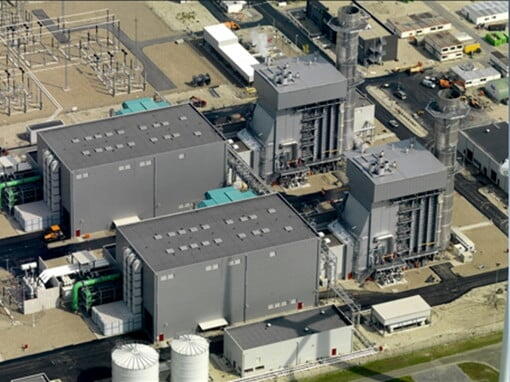
Figure #1

About the song
“Strange Magic” was a cut on The Electric Light Orchestra’s 1975 album “Face the Music”





Comments
Perhaps the next installment will explain the calcs to covert fuel cost in $/MMBtu to power cost in $/MWh.
It's a simple matter once you know the heat rate.
Thanks!
Yep, that's the plan. It should be covered in both of the next installments. Of course, the way this really gets all the way into market power prices varies all over the country and gets really complicated in some regions. But I'll touch on it conceptually.