Determining whether to approve plans for interstate natural gas pipeline projects has never been an easy task for the Federal Energy Regulatory Commission. There are so many things to consider, chief among them the need for the pipeline, impacts on the environment and landowners along the route, and what it all means for gas customers. But as complicated as the decision-making process may be, at least pipeline developers, gas producers, and customers knew that once a new pipeline was approved by FERC, permitted, built, and put into service that the matter was closed — that is, the pipeline was here to stay. Now, in the wake of a groundbreaking court ruling on a new gas pipeline near St. Louis, things are not so certain. As it turns out, we’re intimately familiar with the matter, having just made the case that the 65-mile Spire STL Pipeline is an important addition to the regional pipeline network that provides supply diversity, improved reliability, and access to lower-cost gas. In today’s RBN blog, we consider the evolution of FERC regulation of gas pipelines and the new uncertainty that all affected parties face.
Decades ago, back when natural gas pipelines themselves bought and controlled most of the supply in the gas market, the process for certifying new pipelines was especially complicated and arduous. In essence, the pipeline company needed to prove to FERC beyond the shadow of a doubt not only that the proposed pipeline was really needed by real, provable demand, but that there was sufficient gas supply at the upstream end of the pipe to serve customers through the project’s lifecycle. Typically, that high bar was met via what you might call a package deal under which gas producers made long-term commitments to supply gas (and show that they had sufficient reserves of gas in place), pipeline companies contracted to buy and transport the gas, and local distribution companies (LDCs) committed to buy the gas from the pipeline. The pipeline’s bundled rates included charges for the gas itself and a range of services: transportation, storage, and peak shaving. Everything was locked down.
That all changed in 1992 with FERC Order 636. It said that gas pipelines would only transport and store gas, not buy and sell it, and that shippers would essentially rent space on pipelines between two or more points. Where gas came from and where it went was no longer the pipeline’s business — the new buzzwords were “open access” and “unbundled.” To give structure to how new facilities are reviewed in the post-Order 636 world, after some experience in the unbundled market, FERC in 1999 issued a statement of policy laying out the hurdles that need to be cleared to get project approval. One such hurdle was a requirement for firm precedent agreements on the project (commitments to sign firm service contracts when the project goes into service) to demonstrate customer demand and the need for capacity. In addition, many other standards were incorporated in the process having to do with the impact on other customers of the same pipeline, on competitors, on landowners, etc. (Pipelines already had to clear the very high hurdle of an environmental analysis under the National Environmental Policy Act, through either an environmental assessment or an environmental impact statement if it was warranted.) Notwithstanding these standards in the policy statement, reliance on precedent agreements became the primary test of need in most cases.

The replay of our Fall 2026 School of Energy (September 9 & 10, Houston) is now available online!
Learn from RBN experts, participate in hands-on Excel modeling, connect with industry peers, and gain a stronger understanding of today's interconnected energy markets.
About the song
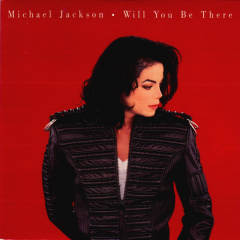
“Will You Be There” was written by Michael Jackson and appears as the 11th song on Jackson's eighth studio album, Dangerous. The song was also featured in the 1993 film, Free Willy, and is the first track on the Free Willy: Original Motion Picture Soundtrack album. Released as the eighth single from Dangerous in June 1993, “Will You Be There” went to #7 on the Billboard Hot 100 Singles chart. It has been certified Platinum by the Recording Industry Association of America (RIAA). Personnel on the record were: Michael Jackson (lead, backing vocals), Greg Phillinganes, Brad Buxer (keyboards), Michael Boddicker, Rhett Lawrence (synthesizer programming), Brad Buxer, Bruce Swedien, Paulinho Da Costa (drums, percussion), Andrae and Sandra Crouch, Andrae Crouch Singers (choir), Cleveland Orchestra, directed by Robert Shaw, conducted by George Szell (Beethoven Prelude orchestrations).
Dangerous was recorded between June 1989 and October 1991 at Record One, Westlake, Larrabee Sound, Record Plant, and Ocean Way Recording in Los Angeles; Smoketree Ranch in Chatsworth, CA; and Toad Hall in Pasadena, CA. Produced by Michael Jackson, Bill Bottrell, Bruce Swedien, and Ted Riley, the album was released in November 1991. It went to #1 on the Billboard Top 200 Albums chart and has been certified 8x Platinum by the RIAA. Nine singles were released from the LP.
Michael Jackson was an American singer, songwriter, record producer, and dancer. Known as "The King of Pop," Jackson is the most awarded music artist in history. He made his professional debut in 1964 at the age of six as a member of The Jackson 5. His solo career took off with the release of his 1979 hit album, Off the Wall. With The Jackson 5, he released 16 studio albums, three live albums, two soundtrack albums, 15 compilation albums, and 40 singles. As a solo artist, he released 10 studio albums, one live album, 34 compilation albums, six EPs, three soundtrack albums, and 63 singles. Jackson has sold more than 400 million records worldwide. His many honors and awards include 15 Grammy Awards, six Brit Awards, and a Golden Globe Award. He is a member of the Rock and Roll Hall of Fame, Songwriters Hall of Fame, Rhythm and Blues Hall of Fame, and Dancers Hall of Fame. Jackson died in Los Angeles in June 2009 at the age of 50.