Feedgas demand for U.S. LNG exports has accelerated in recent months with the addition of new liquefaction and upstream pipeline capacity. The latest export facility contributing to the winter surge in feedgas flows is Cheniere Energy’s Corpus Christi LNG (CCL) in South Texas — the first greenfield LNG export terminal in the Lower 48 and the first such terminal, greenfield or otherwise, in Texas. Train 1 has yet to be commercialized, but already it’s added 0.5 Bcf/d of gas demand to the Texas market through December. The facility sources its gas via a number of legacy interstate and Texas intrastate pipelines, many of which have undergone reversals and expansions in order to serve LNG terminals but also another competing export market: Mexico. How will CCL change gas flows in South Texas? Today, we provide an update of feedgas flows to Corpus Christi, including a closer look at the upstream pipeline routes facilitating those flows.
This is Part 3 in our blog series examining recent changes in U.S. LNG export demand and the pipeline flows feeding it — a subject we cover comprehensively on a weekly basis in RBN’s LNG Voyager report (published each Tuesday morning). In Part 1 of the series, we started with the latest on Cheniere’s Sabine Pass Liquefaction terminal (SPL) in Cameron Parish, LA, where the start-up activities for Train 5, along with the full in-service of a new feedgas route via Kinder Morgan Louisiana Pipeline’s Sabine Pass Expansion project, have boosted feedgas flows to well over 3 Bcf/d in recent weeks. Then, in Part 2, we shifted our focus to Dominion’s Cove Point LNG export facility in Maryland, where the in-service of two pipeline expansions — Williams/Transco’s Atlantic Sunrise and TransCanada/Columbia Gas Group’s WB Xpress — has improved supply connectivity, with daily volumes consistently near or at capacity for the first time since the single-train facility began producing LNG.
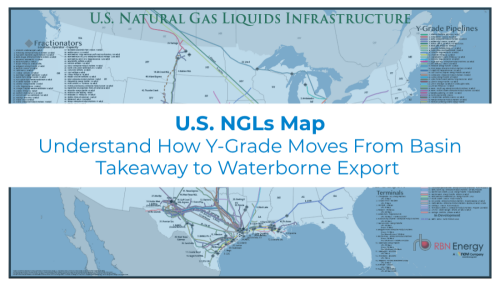
Visualize the infrastructure behind U.S. NGL movement.
The U.S. NGLs Map provides a comprehensive view of the transport, processing, and export networks moving NGLs across the U.S.
The uptick at these existing terminals coincided this fall with start-up activities for the two newest export facilities — Cheniere’s CCL and Sempra Energy’s Cameron LNG, which are both in the process of commissioning their initial trains. The latter of those has yet to see substantial feedgas flows, so we’ll come back to it in a later blog. For its part, CCL’s feedgas intake last month averaged close to 400 MMcf/d, or about 70% of full utilization. How is CCL being supplied now and how will that evolve? We’ll get to the pipeline infrastructure and feedgas flows in a bit, but first a quick overview of the facility.
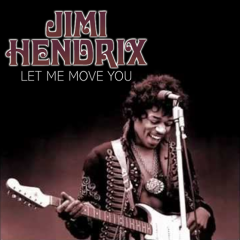
About the song
"Let Me Move You" was written by Jimi Hendrix and appears as the fifth song on Hendrix's People, Hell and Angels album, released by the Hendrix estate in March 2013. It features Hendrix on guitar, with his long-time friend Lonnie Youngblood on vocals and sax. The song was recorded at the Record Plant in New York City in March 1969. People, Hell and Angels contains 12 previously unreleased recordings of tracks Hendrix was working on as a follow-up to his Electric Ladyland album. It reached #2 on the Billboard Top 200 Albums chart.
Jimi Hendrix was an American guitarist, singer and songwriter. He released three studio albums and one live album before he passed away in September 1970 at the age of 27. He has seven Grammy Awards, received a star on the Hollywood Walk of Fame in 1991, was inducted into the Rock and Roll Hall of Fame in 1992 and into the UK Music Hall of Fame in 2005, and was commemorated with a stamp from the U.S. Postal Service in 2014. Many have credited Jimi Hendrix with changing the way the electric guitar sounded in popular music and culture.