It’s no secret by now that Permian natural gas pipelines have been running near full the last few months, jam-packed like Southern California traffic while trying to whisk away copious volumes of mostly associated natural gas to markets north, south, west and east of the basin. Despite every major artery running near capacity this summer, Permian prices had so far managed to avoid falling below the dreaded $1.00/MMBtu threshold, a precipice that historically defines a gas producing basin as definitively oversupplied. That all changed yesterday, as word came in that Southern California Gas Company, one of the largest recipients of Permian gas, has nearly filled its gas storage caverns and will soon need far less gas hitting its borders. That’s particularly bad news for the Permian, which has few other options if it needs to reduce the supply that is currently flowing west out of the basin to California. A large unplanned outage for maintenance was also announced on one of the pipelines leaving the Permian and heading north to the Midcontinent. As a result, the SoCalGas news and maintenance combined to put a huge dent in Permian gas prices, some of which plunged as low as 50 cents in Wednesday’s trading. Today, we detail this most recent development and the implications for Permian gas takeaway.

Crude Oil Permian provides detailed analysis of the fundamental drivers impacting the Permian Basin crude oil market including weekly data, analysis and market intelligence updates of: Permian crude oil supply and demand, pipeline outflows and capacity, prices, and infrastructure updates.
We’ve written extensively on Permian Basin natural gas the last few months, most recently detailing the proposed Whistler Pipeline in Whatever It Takes. We also looked at Kinder Morgan’s Permian Highway Pipeline, which recently became the second new Permian pipeline to reach a final investment decision (FID) to proceed, in our blog titled P.H.P., Dynamite!. Our last blog focusing specifically on Waha gas prices was in July, when Rollercoaster analyzed the price swings this summer. Earlier in the summer, in Trouble Every Day, we outlined potential options for Permian natural gas should pipeline capacity out of the basin fill up before the first new pipeline — Kinder Morgan’s Gulf Coast Express (GCX) — starts up in late 2019. We also recently discussed GCX and other potential competing projects as part of our Blame It On Texas series. Today, we dive into the drivers behind yesterday’s news that has likely turned the Permian gas pipeline traffic jam into a pileup.
Maybe it was the shellacking the Texas Longhorns football team put on the University of Southern California on Saturday or maybe it was just timing (definitely the latter), but the Southern California gas markets sent news Wednesday that sacked the Permian natural gas market. Football references aside, here are the facts of what happened as we have been able to ascertain. On Tuesday (September 18) at 12:23 PM Pacific Time, the electronic bulletin board of SoCalGas, the Southern California gas utility owned by Sempra Energy, posted an update to its maintenance schedule for the Aliso Canyon Storage Facility. The posting indicated that Aliso Canyon would be filled to its currently authorized maximum inventory of 34 Bcf on September 24 (this coming Monday). This is big news for not only the SoCalGas gas market, but also the supply basins that send natural gas to Southern California, including the Rockies, San Juan, and Permian. With Aliso Canyon reaching capacity early next week, the SoCalGas system will see a storage injection reduction of 400 MMcf/d, according to the SoCalGas website. This is a bummer for the Permian, given the huge volumes of gas that leave the basin and head west to California. The posting came out after gas markets had closed, so market participants had to wait until trading started on Wednesday morning to gauge the impact of the news. We’ll get to those ramifications in a moment, but first a little history on the situation regarding Aliso Canyon and SoCalGas.
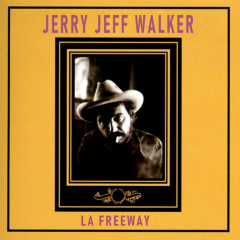
About the song
"L.A. Freeway" was written by Guy Clark, and appears on fellow Texas songwriter Jerry Jeff Walker's 1972 album, Jerry Jeff Walker. The song chronicles Clark's feelings about leaving Los Angeles to move to Nashville. The line in the song, "Here's to you ol' Skinny Dennis," is a reference to Guy Clark's bass player in his L.A. days, who died tragically at the age of 28 of a heart attack while playing his bass at a gig in Seal Beach, CA. The Jerry Jeff Walker album on Decca Records marks the completion of Walker's transition from a New York folksinger to an Austin-based singer/songwriter. Many of the players in what would become the Lost Gonzo Band in Austin played on some of the cuts on the album.
Jerry Jeff Walker (real name: Ronald Clyde Crosby) is best known for writing "Mr. Bojangles," which Walker included on his 1968 LP of the same name but which was made famous by the Nitty Gritty Dirt Band in 1970-71. Walker has recorded 30 albums to date, and still makes live appearances occasionally.