Thousands of unionized dockworkers walked off the job at ports along the U.S. East and Gulf coasts October 1 in the first work stoppage for those regions since 1977. Three days later, they’re heading back to work with a tentative deal on wages in hand and an agreement to continue negotiating on other issues through mid-January. The strike didn’t threaten liquid exports like crude oil and LNG but imports of action figures and exports of plastic pellets used to make them — as well as other dry containerized products and feedstocks — hit a brief standstill. In today’s RBN blog, we’ll examine the potential fallout avoided by the labor agreement.

The replay of our Fall 2026 School of Energy (September 9 & 10, Houston) is now available online!
Learn from RBN experts, participate in hands-on Excel modeling, connect with industry peers, and gain a stronger understanding of today's interconnected energy markets.
News of a U.S. dockworker strike typically conjures up thoughts of California — specifically, the ports of Los Angeles and Long Beach, the biggest gobblers of containerized imports that reach North America, where contract talks get strained every few years. This time dockworkers at ports on the other two U.S. coasts went on strike in a contract dispute that choked containerized commerce — the dry stuff that arrives either in huge metal boxes stacked on container ships or vehicles in roll-on/roll-off cargo ships. (Roll-on/roll-off, or commonly called ro-ro, refers to ships built so vehicles can drive on and drive off, whether they be cargo ships or ferries.)
Here in the RBN blogosphere we focus quite a bit on liquid energy like crude oil, gasoline and diesel, as well as gases chilled to liquid form for transport, like LNG, propane and ethane. Talk of the International Longshoremen’s Association (ILA) strike in the days leading up to the walkout focused largely on how a prolonged stoppage could slow those Amazon deliveries and perhaps even bring a blue Christmas for children seeking the hottest toys. Fresh fruits like bananas? Brown mush sitting in a container on a ship unable to berth.
Major liquids exporters and importers weren’t concerned about the strike’s impact on their operations, as dockworker unions like the ILA have limited direct involvement with tanker movements, if any. ILA members are dockworkers at container terminals and don’t handle liquid cargo. But container terminals at U.S. ports that do billions of dollars in business every year faced a potential protracted strike’s impact like a sharp knitting needle jammed in your thigh — a knitting needle that could have been imported to the U.S. in a metal box unloaded from a massive ship by a huge crane (see photo below).
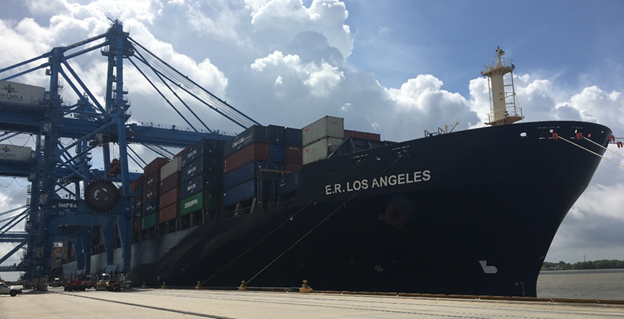
Figure 1. Container Ship Docked at the Port of New Orleans. Source: RBN
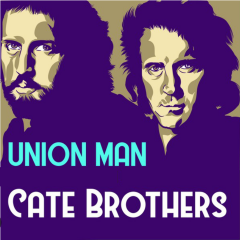
About the song
“Union Man” was written by Earl Cate, Ernie Cate and Steve Cropper. It appears as the second song on side one of the Cate Brothers’ major label debut studio album, Cate Bros. Released as a single in February 1976, it went to #24 on the Billboard Hot 100 Singles chart. It would be the only Top 40 single for the duo. The song would fill a dance floor in the late 1970s when performed by Tulsa cover band, Paradise, which had two RBN employees in its membership. Personnel on the record were: Ernie Cate (lead vocal, electric piano), Earl Cate (lead guitar), Steve Cropper (guitar), David Foster (Clavinet, synthesizer), Scott Edwards (bass), Eddie Green (drums), and Gary Coleman (percussion). RBN personnel in Paradise were: Rusty Braziel (bass, backing vocals), Mickey McMahan (lead guitar, backing vocals).
The album, Cate Bros., was recorded in 1975 at Clover Studios in Los Angeles. Produced by Steve Cropper, the album was released in December 1975. The album cover featured the Cate Bros. logo with a fishhook representing the letter C, drawn by artist Glen Christensen. Two singles were released from the LP.
The Cate Brothers is an American rock band formed in Fayetteville, AR, in 1967 by twin brothers Earl and Ernie Cate. The duo began recording as The Cates Gang in 1970, releasing two albums on the short-lived Metromedia Record label whose only charting artist was teen heart-throb Bobby Sherman. After the recommendation from their longtime friend and fellow Arkansan, Levon Helm, the band secured a major-label deal with Asylum Records in Los Angeles in 1975. They have released 13 studio albums, one live album, one EP, and two singles. In 2020, a documentary of the band, Cate Bros: Arkansas Legends of Rock and Soul, was released. The band officially retired in 2010, but still occasionally perform in the Arkansas region.