Despite the pandemic-driven economic slowdown wreaking havoc on the global LNG market, U.S. LNG export volumes from operating terminals have proven resilient, so far. Total feedgas deliveries to the liquefaction and export facilities peaked at 9.44 Bcf/d less than a month ago and are averaging about 8.3 Bcf/d in April to date. But for many of the already-struggling second wave of U.S. liquefaction projects still under development, the one-two punch of the crude oil price crash and COVID-related lockdowns has further stymied — or in some cases even reversed — their progress toward securing long-term capacity commitments and reaching final investment decisions anytime soon. Today, we provide an update on the status of the next round of prospective LNG export projects.
As we discussed in You Wreck Me, the global battle against COVID in recent weeks has caused big cuts in gas demand in key LNG-consuming regions, worsened an existing supply glut, sent international gas prices to record lows and tightened the price spreads for U.S. LNG offtakers delivering into those supply-saturated markets. Port closures due to COVID lockdowns in Europe and Asia have resulted in more cargoes floating offshore or entering the spot market in efforts to find alternative buyers. Despite all this, U.S. LNG exports have remained steady up to this point, save for what, at least on face value, appear to be brief maintenance or weather-related disruptions. That’s because of the long-term, take-or-pay sales and purchase agreements (SPAs) that anchor over 90% of operating U.S. liquefaction capacity. These commitments are critical not only for ensuring steady utilization rates once the facility comes online but for shoring up prospects for the two dozen or so LNG projects currently in development in North America. However, current market conditions have made securing these commercial agreements nearly impossible. Today, we turn our attention to these, the second wave of LNG projects vying to cross the finish line and the impacts of recent events on their progress.

Visualize the infrastructure behind U.S. NGL movement.
The U.S. NGLs Map provides a comprehensive view of the transport, processing, and export networks moving NGLs across the U.S.
First, let’s put the second-wave projects in context. The first wave of North American LNG export projects have so far brought on 17 trains — including 12 large-scale trains and 5 “mini” trains — totaling 56.2 MMtpa (7.4 Bcf/d) of liquefaction and export capacity across six terminals (green diamonds on Figure 1 map). Note that feedgas deliveries to the facilities have far exceeded that volume, peaking well above 9 Bcf/d as we noted earlier, given that most of the facilities burn gas for power consumption; also, there’s typically some loss, or “shrink,” that occurs during normal plant operations. Another ~60 MMtpa (7.9 Bcf/d) in projects is in commissioning or under construction, including 20.4 MMtpa (2.7 Bcf/d) at already-operating facilities that are due for completion over the next 20 months. If that goes as planned, U.S. LNG export capacity will total 76.6 MMtpa (10.1 Bcf/d) by the end of 2021.
About the song
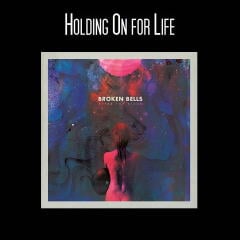
"Holding On for Life" was written by James Mercer and Brian Burton (Danger Mouse). It appears as the third track on Broken Bells' second studio album, After the Disco. Released in November 2013, the single went to #2 on the Billboard Adult Alternative Songs and #22 on the Billboard Hot 100 Singles charts. Personnel on the record were: Brian Burton (drums, organ, piano, synthesizer, bass, guitar, percussion) and James Mercer (vocals, guitar, bass, organ, synthesizer, percussion). Backing vocals were provided by Elizabeth Berg, Heather Porcaro, Myla Balugay and Rebecca Ann Stark. Orchestrations were done by The Angel City String Orchestra. The horn section was: Kamasi Washington (tenor sax), David Ralicke (trombone) and Nathaniel Walcott (trumpet).
After the Disco was recorded between October 2012 and November 2013, at Mondo Studio and Senora Recorders in Los Angeles; Glenwood Place in Burbank, CA; and Firehouse Studios in Pasadena, CA. The album was produced by Danger Mouse (Brian Burton). Released in January 2014, the album went to #5 on the Billboard Top 200 Albums chart and #1 on the Top Alternative and Top Rock Albums charts.
Broken Bells is an American indie rock duo composed of recording artist, songwriter and record producer Brian Burton (better known as Danger Mouse) and James Mercer, the lead singer and guitarist for the indie rock band The Shins. When performing live, Burton and Mercer are joined by touring musicians Dan Elkan and Jon Sortland. Broken Bells have released two studio albums, one EP and 10 singles. The band still records and occasionally tours. Their latest single, “Shelter,” was released in December 2018.