As exports of crude oil, natural gas and NGLs have surged, U.S. markets for these energy commodities have undergone radical transformations. Exports now dominate the supply/demand equilibrium. These markets simply would not clear at today’s production levels, much less at the volumes coming on over the next few years, if not for access to global markets. Making sense of these energy market fundamentals is what RBN’s School of Energy is all about. Did you miss our conference a few weeks back? Not to worry! You’ve got a second chance! All the material from the conference — including 20 hours of video, slide decks and Excel models — are now online. Fair warning: Today’s blog is an unabashed advertorial for the latest RBN School of Energy + International Online.
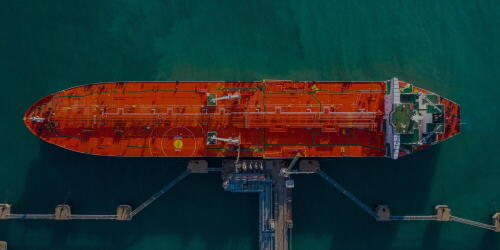
The Crude Voyager is a weekly analysis of U.S. Gulf Coast loading activity that explains the ebbs and flows of crude loadings, destinations, and geopolitical issues impacting U.S. exports. It outlines the major paths for laden tankers hauling U.S. crude all over the world and reflects the change in tanker departures to the main regions that consume U.S. crude.
We’ve been talking about this transformation a lot in the RBN blogosphere. U.S. energy markets are coming to the end of their latest infrastructure cycle just as the reality of tight capital markets is sinking in. New oil and gas takeaway capacity out of the Permian is up and running. Long-planned LNG terminals and NGL-consuming petrochemical plants are finally flowing volumes. Essentially all incremental crude, gas and NGL production is being exported to global markets that — so far, at least — have been absorbing the new supply. All this has huge implications for energy flows, infrastructure utilization and price relationships across all of the energy commodities.
We explored these relationships over two and a half days in Houston at RBN’s School of Energy + International. If you are not familiar with our School of Energy, the conference is structured more like a classroom experience, where we work through current developments in some aspect of the market and then examine them in the context of Excel models that grapple with a wide range of issues, such as production economics, production forecasting, crack and frac spreads, gas processing economics, ethane rejection, petrochemical feedstock selection and all sorts of similar topics. These models are much like what we’ve used in past Schools, except they have all been updated and upgraded. Likewise, the course content follows the same themes we write about each day in the blog – namely that the relationships among the energy commodities have changed such that the markets for natural gas, NGLs and crude oil are tied together in ways that are shifting dramatically due to the dominant role of exports today.
About the song
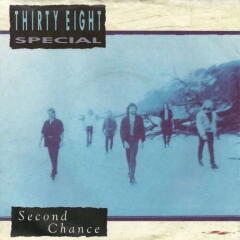
"Second Chance" was written by Max Carl, Jeff Carlisi and Cal Curtis, and was the second single released from 38 Special's eighth studio album, Rock and Roll Strategy. Released in February 1989, it went to #1 on the Billboard Adult Contemporary, #2 on the Mainstream Rock Tracks, and #6 on the Hot 100 charts. "Second Chance" began as a 1983 song demo from Carlisi and Curtis entitled, "I Never Wanted Anyone Else But You." After new vocalist/keyboardist Max Carl (formerly with Jack Mack & The Heart Attack) heard the song, he added the line, "a heart needs a second chance," and the song was rewritten to be "Second Chance." It would become the best-selling single of the band's career so far.
Rock and Roll Strategy was recorded at Soundscape Studios in Atlanta and produced by Rodney Mills. It was released in September 1988, and went to #61 on the Billboard Top 200 Albums chart. It had the band going for a more "adult contemporary" sound, and was the first album to feature vocals from new member Max Carl, who sang lead on "Second Chance." Personnel on the record were: Max Carl (vocals, keyboards), Jeff Carlisi (guitar, steel guitar), Donnie Van Zant (vocals), Danny Chauncey (guitar), Jack Grondin (drums) and Larry Junstrom (bass). James Stroud added Synclavier and drum programming to the record.
38 Special is an American rock band formed in Jacksonville, FL, in 1974 by Donnie Van Zant (brother of Lynyrd Skynyrd's Ronnie Van Zant) and Don Barnes. The group has released 12 studio albums, four live albums, four compilation albums and 25 singles to date. More than two dozen different band members have passed through the ranks of the band since its inception. Original member Don Barnes, along with Bobby Capps, Gary Moffatt, Barry Dunaway and Jerry Riggs, still tour as 38 Special.