
Western New York-based National Fuel Gas (NFG), founded in 1902, has evolved into an energy industry unicorn — the only U.S. company fully integrating exploration and production, midstream gathering and transportation with downstream utility sales of natural gas. For more than a decade, NFG resisted the financial, strategic and investor pressures that led virtually every other major utility to exit the upstream in a wave that peaked in the 2010s. In today’s RBN blog, we analyze the factors that drove the company’s October 14 announcement that it would split into two listed companies and evaluate the implications for natural gas development in Appalachia.
NFG was one of numerous entities spun out of John D. Rockefeller’s Standard Oil Company, uniting former Standard Oil Natural Gas Trust interests in Western New York and Pennsylvania. The company evolved into an umbrella for gas supply and distribution with milestones that included development of the first U.S. underground natural gas storage reservoir in 1916 and absorption of two pioneering Appalachia gas E&Ps in 1913 and 1928. By the mid-1970s, the company internally segmented its Western New York utility into NFC Distribution Corp., its interstate pipeline and storage assets as NFG Gas Supply Corp., and its upstream operations as Seneca Resource Corp.
To truly understand Cushing — what it does and how it works — you need to know the hub’s assets and how they fit together. RBN’s Cushing Crude Oil Playbook provides the first one-stop, comprehensive guide to the hub’s assets.
In the volatile energy industry, NFG has stood out for its conservative fiscal strategy and investor focus: the company has 124 consecutive years of dividend payments and 56 consecutive years of annual dividend increases. However, NFG wasn’t immune to the pressures to accelerate upstream growth. Seneca Resources acquired a 75% interest in Argo Petroleum’s California oil and gas properties in 1987 and drilled its first offshore Gulf well in 1994. However, neither initiative achieved significant scale. NFG’s firm commitment to its long-standing dividend policy meant that Seneca chose not to join its E&P peers in outspending cash flows to compete in the wild land grab that marked the beginning of the Shale Revolution in the early 2000s.
Until the 1990s, ownership of upstream assets was normal for vertically integrated gas utilities. Merchant-energy subsidiaries explored and developed gas production fields to secure supply and fill storage-linked reservoirs. Federal deregulation in the 1990s expanded wholesale competition and pushed utilities toward their regulated businesses. They began shedding volatile, capital-intensive E&P assets less aligned with regulated returns. Balance-sheet pressure increased in the 2000s, particularly after the 2008 financial crisis. Utilities prioritizing stability found eager buyers in expansion-focused independent producers. Virtually all exited the upstream, including major utilities such as MDU Resources, CenterPoint Energy, Dominion Energy and Sempra Energy.
NFG was the notable exception, committing to its fully integrated strategy. Because of capital constraints, Seneca Resources focused its path to participate in shale growth on its Appalachia base. In 2009, the company drilled its first operated Marcellus shale well in Tioga County, PA. To integrate assets across the chain, and based on its long history of pipeline development and construction, Seneca formed National Fuel Gas Midstream Corp. to build gathering facilities that brought Seneca’s Appalachian production to market. Seneca exited the Gulf and wound down its California operations after ramping up Pennsylvania development as Appalachia rapidly expanded into the leading U.S. unconventional natural gas play. National Fuel Gas Supply Corp., which had acquired Duke Energy’s Empire North pipeline in 2003, funded a series of expansion projects from 2010 to transport higher volumes of produced gas to its Western New York/Pennsylvania utility service area and to other connected markets on its pipeline system.
In May 2020, as the E&P industry struggled with a steep, pandemic-induced plunge in commodity prices, NFG’s financial stability allowed it to make the largest acquisition in its then 118-year history: the $505 million purchase of Shell’s upstream and gathering assets in northern and western Pennsylvania. The deal boosted Seneca Resources’ total proved reserves, Appalachia gas production and total Appalachia acreage by 23%, 36% and 52%, respectively, while adding 142 miles of gathering assets and 300 MMcf/d of firm transportation capacity. Seneca accelerated exploration and development capital spending from $360 million in 2020 to $538 million in 2022, boosting output 30% from 900 MMcf/d in 2021 to 1.16 Bcf/d in 2025.
Seneca’s exploration and development capex declined to $465 million in 2025 and we expect it to remain flat in 2026. However, NFG projects a 50% increase in its firm transportation capacity to 1.5 Bcf/d by 2030, driven largely by premium Pennsylvania demand from data centers and industrial development. Seneca Resources boasts an Appalachia inventory of more than 25 years, with a $2.25/MMBtu breakeven at the current development rate, and an independent Enverus assessment confirms the company’s inventory depth is at the top of its peer group. The inventory allows significant development acceleration to meet the growing demand.
But funding that growth could be an issue under NFG’s current integrated structure. As production increased, Seneca and the associated gathering assets (Integrated Upstream and Gathering, or IUG) accounted for an increasing share of NFG’s earnings, reaching 68% of fiscal year 2025 adjusted EBITDA (blue slice in Figure 1 below), far outpacing its Pipeline & Storage (orange slice) and Utility (gray slice) segments.
About the song
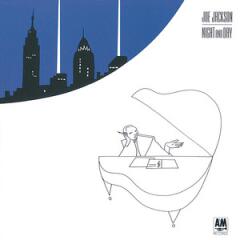
“Breaking Us in Two” was written by Joe Jackson and appears as the first song on side two of Joe Jackson’s fifth studio album, Night and Day. The melancholic ballad talks about the need for space in a relationship, balanced by the fear of breaking up. The song’s music video was filmed on location around Oakworth Railway Station in Oakworth, England. Released as the third single from the LP in August 1982, it went to #18 on the Billboard Hot 100 Singles chart. Personnel on the record were: Joe Jackson (lead vocals, keyboards), Graham Maby (bass, backing vocals), Larry Tolfree (drums, percussion), Svetland Sopoulos, Ricardo Torres (percussion), and Al Weisman and Grace Millan (backing vocals).
Night and Day was recorded in January and February 1982 at Blue Rock in New York City and produced by David Kershenbaum and Joe Jackson. The LP pays tribute to songwriter Cole Porter, a major influence on Joe Jackson. Released in June 1982, it went to #4 on the Billboard 200 Albums chart and has been certified Gold by the Recording Industry Association of America. Five singles were released from the LP.
Joe Jackson (David Ian Jackson) is a British singer, songwriter and musician. He began playing piano in bars when he was 16 and won a scholarship at 18 to study music composition at London’s Royal Academy of Music. He signed to A&M Records in 1978 and released his debut studio album, Look Sharp, in January 1979. He has released 20 studio albums, eight live albums, two soundtrack albums, 16 compilation albums and 58 singles. He released his latest studio album, Hope and Fury, in April 2026. Jackson is on tour in Europe until December.
"About the Song" -- written by Mickey McMahan , RBN Director of Musicology