The Utica and “wet” Marcellus plays in eastern Ohio, northern West Virginia and western Pennsylvania are producing increasing volumes of natural gas liquids and field condensates that need to be moved to market. In response, MPLX, a master limited partnership formed by Marathon Petroleum Corporation (MPC) six years ago, has been implementing a multi-part strategy to develop new or expanded pipeline takeaway capacity through the Midwest to deal specifically with the heaviest NGLs — natural gasoline and other pentanes — and with field condensates. That work is now largely done, the results have been positive, and MPLX is now undertaking the next phase of its strategy that will further expand the system’s capacity and add a new element: the ability to transport batches of two other, lighter NGLs — normal butane and isobutane — on a few of the same pipelines. Today, we discuss the next steps the company is taking to facilitate the transport of liquid hydrocarbons out of the Utica and Marcellus.
Two years ago, in Part 1 of our 1-2-3 blog series, we discussed the fact that while most of the market talk about the Utica and wet Marcellus focuses on either natural gas or lighter NGLs like ethane, propane, and butanes (normal and iso-), the side-by-side regions produce sizable volumes of natural gasoline (an NGL also known as plant condensate) and superlight crude (also known as field condensate or lease condensate), both of which are important products that have the potential for value uplift. Plant condensate/natural gasoline, separated out at gas plants and fractionators, is used as a gasoline blending agent, a feedstock for steam crackers and as a diluent — that is, blended into heavy bitumen crudes in Western Canada to reduce viscosity and enable them to flow more easily through pipelines. Field condensate, which is produced at the lease, can be blended into crude oil, run as a feedstock at refineries and condensate splitters or used as diluent, among other things. Also, recall that condensate splitters are simple refineries that process condensate into its component fractions — mostly NGLs, naphtha and distillate or jet kerosene. In both Part 1 and Part 2, we noted that most condensate and natural gasoline was being transported within and out of Marcellus/Utica production areas via truck, rail or barge.

The Crude Voyager is a weekly analysis of U.S. Gulf Coast loading activity that explains the ebbs and flows of crude loadings, destinations, and geopolitical issues impacting U.S. exports. It outlines the major paths for laden tankers hauling U.S. crude all over the world and reflects the change in tanker departures to the main regions that consume U.S. crude.
We also described MPLX’s three-part, pipeline-based strategy to more efficiently transport the field condensate and natural gasoline produced in the Utica and wet Marcellus to end-users. The strategy involved the construction of new pipelines, the repurposing of existing pipelines and the development of new storage capacity, all with the aim of piping a good bit of Marcellus/Utica field condensate production to area refineries, piping field condensate and natural gasoline to other refineries throughout the Midwest, and piping Northeast natural gasoline to Western Canada for use as diluent.
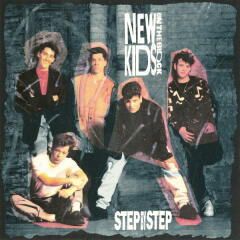
About the song
“Step by Step” was a big hit single for the American boy band, New Kids on the Block in 1990. The song, which was the first single off the group’s fourth studio album (also titled Step by Step), was written by Maurice Starr. The single spent three weeks at #1 on the Billboard Hot 100 chart, and went on to be certified platinum by the Recording Industry Association of America. The Step by Step LP went to #1 on the Billboard 200 Top 200 Albums chart, and was certified platinum three times, which means it sold more than three million copies.
New Kids on the Block are: brothers Jordan and Jonathan Knight, Danny Wood, Donnie Wahlberg and Joey McIntyre. After the success of his group "New Edition" in the early eighties, Maurice Starr (Larry Curtis Johnson) created New Kids on the Block in Boston in 1984. Then 15-year-old Donnie Wahlberg (older brother of movie star Mark) was the first member Starr signed up. New Kids on the Block, which disbanded in 1994 but reunited in 2007, has made seven studio albums, and has sold over 80 million records worldwide to date.