Much like their upstream counterparts, midstream companies have shifted to fiscal conservatism over the past few years, focusing less on growth and capital investment and more on shareholder returns, acquisitions and debt reduction. But there are significant differences between the strategies of midstream companies set up as traditional corporations, or C-corps, and those established as master limited partnerships, or MLPs. In today’s RBN blog, we continue our short series on midstream company cash flow allocation with an analysis of their reinvestment rates vs. their shareholder payouts.

Canadian crude output is rising, requiring new export routes. As traditional pathways face constraints, the U.S. Rockies—especially the Guernsey, WY hub—are emerging as key corridors for moving Canadian heavy crude to downstream markets, including the Gulf Coast.
As we said in Part 1, companies in the midstream space have had to deal with significant changes both in tax law and in market realities prior to and during the Shale Era. The tax-related advantages once associated with MLPs waned with the 2017 cut in federal corporate taxes, for example, and the extraordinary infrastructure needs that came with the renaissance in U.S. oil and gas production led midstreamers to emphasize growth over shareholder returns. Our aim in this short blog series is to describe what the past five years have been like for midstreamers from a business and financial perspective. We determined that a good way to do that would be to examine the cash flow allocation of 13 large midstreamers with market caps of $10 billion or greater, about half of them traditional corporations and half MLPs.
Generally speaking, midstream companies using a corporate entity structure were much more aggressive with their use of cash flow when compared with the MLPs. Corporations spent 62% (blue bar to far left in Figure 1) of their $221 billion in cash flow on capital spending between 2019 and 2022 vs. 40% for MLPs (red bar to far left). To support this more lavish spending, the companies relied heavily on borrowing. The C-corps borrowed $23.1 billion (19% of cash flow) between 2019-22 compared with $1.8 billion (2% of cash flow) for the MLPs.

About the song
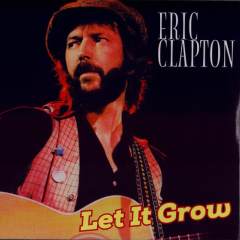
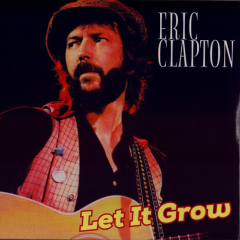
“Let It Grow” is written by Eric Clapton and appears as the third song on side two of Clapton’s second solo album, 461 Ocean Boulevard. The song’s lyrics are a reflective treatise on love and redemption. After a three-year hiatus from the music industry, and overcoming heroin addiction, there is a good chance that Clapton wrote this song while living in Tulsa around 1973, enjoying the local music scene under the auspices of good friend Leon Russell, who had a home and studio in Tulsa at the time. Three-fifths of the band Clapton put together for 461 Ocean Boulevard came from Tulsa: longtime Russell and Clapton bassist Carl Radle, and organist Dick Sims and drummer Jamie Oldaker, both of whom came from the popular Tulsa band, Tulsa County. Personnel on the record were: Eric Clapton (lead vocals, guitar, slide guitar), George Terry (guitar, backing vocals), Dick Sims (organ), Albhy Galuten (piano), Carl Radle (bass), Jamie Oldaker (drums), and Yvonne Elliman (backing vocals).
461 Ocean Boulevard was recorded in the spring of 1974 at Criteria in Miami, with Tom Dowd producing. The album’s title refers to the address Clapton and his band were living at in Golden Beach, FL, while they were recording the album. Clapton used his black Stratocaster —a Gibson ES 335 nicknamed “Blackie” — for slide work, and various Martin acoustic guitars in making the LP. Released in July 1974, the album went to #1 on the Billboard 200 Albums chart and has been certified platinum by the Recording Industry Association of America. Two singles were released from the LP.
Eric Clapton is a British rock and blues guitarist, singer, and songwriter. He was a member of The Yardbirds, John Mayall’s Bluesbreakers, Cream, Blind Faith, Delaney & Bonnie’s band, Derek and the Dominoes, and has an extensive solo career that began in 1974. As a solo artist, Clapton has released 21 studio albums, 15 live albums, 21 compilation albums, seven soundtrack albums, and 81 singles. He has an OBE and CBE from Great Britain and a Grammy Lifetime Achievement Award, and is a Commander of the Ordre des Arts et des Lettres of France. He was inducted into the Rock and Roll Hall of Fame three times: as a member of The Yardbirds and of Cream, and as a solo artist. He continues to record, tour, and put on the annual Crossroads Guitar Festival. His next tour dates are scheduled for May 2024 with performances in the UK and Ireland.