The market is used to crude oil spreads in the Permian Basin being volatile. Fast-paced production growth, the addition of new takeaway pipelines — and the rapid filling of those new pipes — have all impacted in-basin pricing, and we’ve seen differentials from the Permian to its downstream markets — Cushing, OK, and the Gulf Coast — widen and narrow as supply and demand fundamentals have changed. But recently, things have gotten a lot wilder. In September 2018, the Midland discount to WTI at Cushing blew out to almost $18/bbl, then narrowed to less than $6/bbl only three weeks later, thanks largely to the start-up of Plains All American’s much-ballyhooed, 350-Mb/d Sunrise Expansion. As Sunrise started to fill up, price differentials initially widened for a brief period of time. But, as we kicked off 2019, the Midland-Cushing spread quickly shrank further and then flipped, with Midland last Friday (January 25) trading at a $1/bbl premium to Cushing crude. You might wonder, how the heck did that happen? In today’s blog, we discuss how things play out when a supply glut evaporates and traders are suddenly caught in a tight market.

Canadian crude output is rising, requiring new export routes. As traditional pathways face constraints, the U.S. Rockies—especially the Guernsey, WY hub—are emerging as key corridors for moving Canadian heavy crude to downstream markets, including the Gulf Coast.
To get a handle on what’s recently transpired in the Permian markets, you need to understand some basics of physical crude oil marketing/trading. For some, marketing crude is very much like balancing a ledger. In the early-to-middle parts of each month, traders start making deals for the upcoming month. For example, during the first two weeks of February, traders will be talking to counterparties about buying or selling crude that will physically move starting on March 1. As they make more sales, they balance them by buying crude to fill those sales. And vice-versa: as traders buy more crude in the field, they make sure they have a sale for it or they’ve lined up crude oil tanks to put it into storage (think back to our This Place is Empty blog). Keep in mind, many sales are for terms longer than one month, as are many contracts to purchase physical crude oil. So, for some traders, their ledger might not change that much month-to-month. If they have, say, 5 Mb/d of sales locked up for three months, and 3 Mb/d of production they’ve arranged to purchase for three months, they know that each month they’ll need to find an incremental 2 Mb/d of supply. They also have the option to go long or short into markets depending on the supply-demand fundamentals at that point in time. (These are very simple cases; things can get much more complicated when traders are buying volumes off trains, in the middle of a pipeline, off a barge, etc.)
Now, back to the Permian. It’s been well-documented that for much of 2018, pipeline takeaway capacity was very hard to come by and most pipelines out of the Permian were full. Production in the area was growing at unprecedented rates, showing no signs of slowing. If you’re a trader in West Texas and you had access to long-haul capacity on a pipeline to a sales market, you were licking your chops — because each morning you were looking forward to another steak-and-martini lunch. Midland discounts (Figure 1) were wide for most of 2018, with Midland-Cushing (blue line) trading as wide as minus-$18/bbl and Midland-Magellan East Houston (Midland-MEH; orange line) hitting minus-$24/bbl. Spreads that wide support all pipeline movements to Cushing or the Gulf Coast, as well as the $18/bbl long-haul trucking costs to Gulf Coast-connected markets at Gardendale, TX, and San Antonio. The cost to transport crude from Midland to Cushing on Plains All American’s recently completed Sunrise Pipeline, for example, is $1.34/bbl. With the Midland discount in September averaging $13/bbl, traders who had access to space on that pipe were making as many sales as possible, re-upping contracts or increasing the length of the terms. Sales markets were extremely lucrative for traders, and there was abundant, inexpensive crude in their backyard. Traders could also go short into markets, increasing the sales side of their ledger while banking on being able to find cheap crude at the last minute.
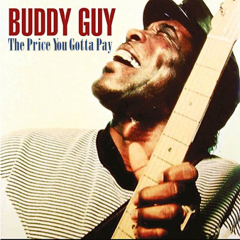
About the song
"The Price You Gotta Pay," written by Keb' Mo', appears on Buddy Guy's 13th studio album, Bring 'Em In. The cut features Keith Richards on second guitar. The album was produced by Steve Jordan and was released in September 2005. Bring 'Em In spotlighted mostly cover songs that Guy liked, and featured many guest artists such as Keith Richards, Carlos Santana, Keb' Mo', and Tracey Chapman. It went to #2 on the U.S. Billboard Top Blues Albums, and #152 on the Billboard Top 200 Albums charts. Personnel on the LP were: Buddy Guy (lead vocals and lead guitar); Willie Weeks and Myron Dove (bass); Steve Jordan (drums); Bernie Worrell, Ivan Neville and Chester Thompson (keyboards); and Danny Kortchmar (rhythm guitar).
Buddy Guy is an American blues guitarist and singer. His influence on guitarists can be heard in the playing of Eric Clapton, Jimi Hendrix, Keith Richards, and Stevie Ray Vaughan. He is also the owner of Buddy Guy's Legends blues club in Chicago. He has released 18 solo studio albums, 10 with Junior Wells, five with Phil Guy (his brother), and one with Memphis Slim. He has won seven Grammy Awards, 23 W.C. Handy Awards, and a Billboard Century Award. Guy also has a National Medal of Arts award, a Kennedy Center Honor, and was inducted into the Rock and Roll Hall of Fame in 2005. He still records and tours to this date.