


The Permian Basin’s crude oil market over the last 18 months has exhibited so many dynamic changes that dedicated observers may be suffering from a bit of neck strain, if not outright whiplash. We’ve seen production rise at an unprecedented rate, followed by a period of slower growth. We’ve also watched the Permian very quickly transform from a region desperate for new long-haul pipeline capacity to a hotbed for midstream investment and infrastructure growth. While we’ve closely tracked these big-picture changes, a lot of other, smaller-scale knock-on effects have been occurring too, with potentially significant implications for the basin’s supply pricing and transportation economics. Today, we explain why the changing fortunes of Permian crude haulers may benefit producers in the basin.
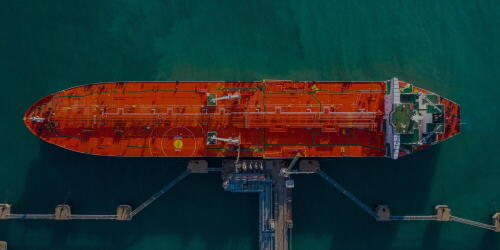
The Crude Voyager is a weekly analysis of U.S. Gulf Coast loading activity that explains the ebbs and flows of crude loadings, destinations, and geopolitical issues impacting U.S. exports. It outlines the major paths for laden tankers hauling U.S. crude all over the world and reflects the change in tanker departures to the main regions that consume U.S. crude.
The Permian’s crude-oil landscape is continually changing — there is absolutely no doubt about that. Over the past four months alone, we have seen two new pipelines come online: first, Plains All American’s Cactus II pipeline (capacity of 585 Mb/d), and, more recently, crude oil flows on the new EPIC system (interim capacity of 400 Mb/d). In addition, we expect the Gray Oak Pipeline, with a capacity of 900 Mb/d, to begin operations by the end of the year. All three pipes have origination points in West Texas with the ability to deliver large volumes of crude to Gulf Coast refineries and export terminals. (For more detail on all of these, check out our recent blogs covering them, as well as our weekly Permian Crude Oil report.)
As this new pipeline space has come online — much of it offered with super-low tariffs — pricing differentials between Midland and Cushing (left graph in Figure 1) and Midland and the Gulf Coast (right graph in Figure 1; MEH stands for Magellan East Houston) have moved dramatically. Midland barrels, which traded at more than a $15/bbl discount to Cushing and a nearly $25/bbl discount to the Gulf Coast as recently as last year, are experiencing a pricing renaissance. In September, Midland actually averaged a premium of $0.50/bbl to Cushing, and the discount to the Gulf Coast tightened sharply to an average of just $4/bbl.

About the song
"Roll On (Eighteen Wheeler)" was written by Dave Loggins and was the title track, first cut and first single from Alabama's eighth studio album, Roll On. The song went to #1 on the Billboard Hot Country Songs chart, and became Alabama's 12th straight #1 single. Personnel on the record were: Randy Owen (lead vocals, rhythm guitar), Teddy Gentry (bass, vocals), Jeff Cook (lead guitar, vocals) and Mark Herndon (drums, percussion).
The album, Roll On, was produced by Harold Shedd and Alabama, and released in January 1984. It went to #1 on the Billboard Top Country Albums chart, and #21 on the Billboard Top 200 Albums chart. It has been certified 4x Platinum by the Recording Industry Association of America. Four singles were released from Roll On, all of which went to #1 on the Billboard Hot Country Singles chart.
Alabama is an American country and Southern rock band formed in Fort Payne, AL, in 1969. They have had 41 #1 songs on the Billboard country charts, and have sold over 75 million records worldwide. They have released 26 studio albums, four live albums, 21 compilation albums and 74 singles. The band has won 15 ACM Awards, 18 American Music Awards, one Billboard Award, seven CMA Awards and two Grammy Awards. They are members of the Country Music Hall of Fame, Vocal Group Hall of Fame and Alabama Music Hall of Fame. Alabama officially disbanded in 2003, but the group has occasionally done some recordings and concerts since then.






Comments
1. Wonder what percent of Permian truck traffic (say measured by trucks on the road) are/were hauling crude.
2. I assume that trucking to Wichita Falls has stopped entirely.