The end of one year and the start of another provides a perfect opportunity to take stock — in this case, to examine total shareholder returns for the institutional and individual investors holding stock in oil and gas producers. As it turns out, 2023 was a mixed bag, with gas-focused E&Ps generally benefiting from a rebound in gas prices (current and future), oil-focused companies taking a hit, and diversified producers ending up somewhere in between. In today’s RBN blog, we continue our review of E&Ps’ total shareholder returns (TSR) with a look at Gas-Weighted and Diversified E&Ps.
In Part 1 of this two-part series, we said that E&P shareholder returns went from minimally positive to disastrously negative in the decade preceding 2021, driving all but the most masochistic (or pig-headed) investors out of the industry as share prices plunged more than 90%. Then, the E&P sector swore off its growth-at-all-costs mantra and transitioned to a maintenance capital spending strategy to maximize cash flow to repay debt and reward long-suffering shareholders with dividends and share repurchases. The industry quickly won back investors in 2021-22 as cash flows fueled by higher commodity prices post-COVID sent dividends soaring. As a result, the combination of rising equity prices and higher dividends boosted TSR to record levels.

Canadian crude output is rising, requiring new export routes. As traditional pathways face constraints, the U.S. Rockies—especially the Guernsey, WY hub—are emerging as key corridors for moving Canadian heavy crude to downstream markets, including the Gulf Coast.
There’s been a mix of good and bad in 2023 — and not much ugly to speak of. The bright spot was from the Gas-Weighted E&Ps, which posted a 7% median gain. The outlook for these companies, whose assets are primarily gas-focused, improved markedly in 2023 as the prospects for continued growth in U.S. LNG exports brightened and futures prices for gas in the second half of the 2020s rose in response. In contrast, TSR for the Oil-Weighted E&Ps declined 3% as oil prices fell toward the end of the year. As you’d expect, the total return for the Diversified E&Ps, whose portfolios are more evenly balanced between oil and gas, fell in between the more focused E&Ps, showing only a modest decline.
In Part 1 we examined the Oil-Weighted peer group in some detail. This time, we shift our attention to Diversified and Gas-Weighted E&Ps. A reminder: TSR is a measure of financial performance that measures the total amount that a stock returns to those who invested in it over a specified period — in our analysis, that period is from the end of 2022 to December 13, 2023. TSR is expressed as a percentage, and is calculated by summing the capital gain or loss from the rise or fall in the stock price and the dividends paid, then dividing that sum by the stock price at the beginning of the period.
Diversified E&Ps
The Diversified E&Ps’ shareholder return declined slightly during 2023. Of the 12 companies in the peer group, six endured declines in TSR, five posted gains and one company was flat. As with the Oil-Weighted E&Ps, the shareholder returns of the Diversified E&Ps (x axis in Figure 1) are negatively correlated with a company’s reinvestment ratio (y axis) — the dotted diagonal line in the chart shows the average correlations.
The two biggest gainers in the Diversified E&Ps were Civitas Resources (CIVI) and Northern Oil & Gas (NOG). CIVI posted the largest shareholder return for the peer group in 2023 (as of December 13) at 32% as the share price went from $57.93 to $68.95 while paying out $7.60/share in dividends. Investors liked the company’s commitment to rewarding shareholders. The producer announced a $1 billion stock buyback in February and made nearly $7 billion in Permian Basin acquisitions during 2023 that will be accretive to shareholder payouts. NOG, in turn, rewarded shareholders with a 23% gain as the share price went from $30.82 to $36.65 and returns were boosted by $1.09/share in dividends. As with Civitas, investors were attracted to Northern’s desire to repatriate monies to shareholders — a move they enhanced by making a few accretive acquisitions during 2023. NOG increased its share-repurchase program back in April and raised its dividend in August.

Figure 1. Diversified E&Ps 2023 Shareholder Returns vs. Reinvestment Rate. Source: Oil & Gas Financial Analytics, LLC
About the song
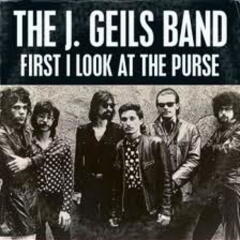
“First I Look at the Purse” was written by Smokey Robinson and Robert Rogers and appears as the second song of side two of The J. Geils Band’s debut album, The J. Geils Band. The band later used it as the opening song on their first live LP, “Live” Full House, released in September 1972. The song was first released as a single by a Motown act, The Contours, in 1965 — that went to #12 on the Billboard R&B and #57 on the Billboard Hot 100 Singles charts. Personnel on The J. Geils Band versions were: Peter Wolf (lead vocals), J. Geils (guitar), Seth Justman (piano, organ), Magic Dick (blues harp), Danny Klein (bass), and Stephen Jo Bladd (drums, percussion).
The album The J. Geils Band was recorded in August 1970 at A&R Studios in New York City with Dave Crawford and Brad Shapiro producing. Released in November 1970 on Atlantic Records, it went to #195 on the Billboard 200 Albums chart. “Live” Full House was recorded in April 1972 at The Cinderella Ballroom in Detroit with Geoffrey Haslam and The J. Geils Band producing. It was released in September 1972 and went to # 54 on the Billboard 200 Albums chart.
The J. Geils Band was an American rock band formed in Worcester, MA, in 1967 by J. Geils, Peter Wolf, Seth Justman, Magic Dick, Danny Klein, and Stephen Jo Bladd. They released 11 studio albums, three live albums, nine compilation albums, and 30 singles. Peter Wolf left the band in 1984 to pursue a solo career. The band made one more album without him featuring Seth Justman on vocals before calling it quits in 1985. Beginning in 1999 the group had several reunion shows prior to founder J. Geils’s death in April 2017. The band has been nominated for induction into the Rock and Roll Hall of Fame five times, but amazingly still have not been picked. Peter Wolf continues to record and tour as a solo artist and harpist Magic Dick still records and tours as a blues artist.