In the nearly 60 years since its inception, the LNG industry has changed significantly. Once a market in which cargoes were sold under long-term, point-to-point contracts in dedicated ships, it has evolved into one in which destination flexibility accounts for an increasing share of LNG trade, with more volumes being sold under short- and medium-term contracts. The changes reflect a trend toward the increasing commoditization of LNG, with the similarities between the LNG and crude oil markets becoming apparent. In today’s RBN blog, we look at the differences in how the oil and LNG markets have developed, whether LNG might achieve the same commodity status as oil, and why the major market players may not want LNG to follow the path of its older cousin.

Visualize the infrastructure behind U.S. NGL movement.
The U.S. NGLs Map provides a comprehensive view of the transport, processing, and export networks moving NGLs across the U.S.
In the case of crude oil, the basic supply structure up to the 1970s had been one where foreign oil companies discovered and developed oil reserves under concessions awarded to them by the host countries that held the oil. This provided the majors with equity volumes of oil, which were fed to their respective refineries. The host nations received income primarily under the tax regimes agreed to by the oil majors, rather than act as sellers of oil on the international market. These profitable, long-term relationships were highly prized by the oil majors, but host nations wanted to gain greater control over their reserves and, following the first oil price crisis in 1972, the industry underwent a de-integration as OPEC nations in particular decided to take control of their produced volumes and the oil majors lost their equity supplies, forcing them to look elsewhere for supply they could control.
The timing of that de-integration was fortuitous in that North Sea oil was discovered in the early 1970s, with the prolific Forties field commencing production in 1975, giving the majors access to the equity oil they wanted. By the mid-1980s the Brent oil market had become established, going on to form the basis for the Brent futures market. The use of Brent pricing as an oil spot market yardstick became commonplace and continues to this day. (For more on Brent’s central place in global oil markets, see Wake Up!)
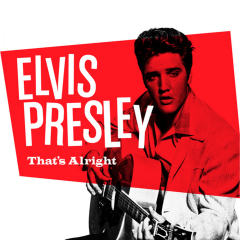
About the song
“That's All Right” was written and first released as a single by blues singer Arthur “Big Boy” Crudup in 1946. Elvis Presley recorded his hopped-up version of the song in July 1954 at Sun Studios in Memphis. Sun Studios owner Sam Phillips heard Presley, Scotty Moore and Bill Black jamming on the song and decided to roll tape and capture a version. Phillips gave an acetate copy of “That's All Right” to Memphis DJ Dewey Phillips to play on his popular “Red, Hot & Blue” radio show. Interest in the song was so great that Phillips played it 14 times as his phone rang off the wall. He had Presley come to the station for a live interview that night and the rest, as they say, is rock and roll history. Phillips released the song as Presley’s debut single a few days later, selling around 20,000 copies. It did not chart nationally but went to #4 on the Memphis charts. Personnel on the record were: Elvis Presley (lead vocal, acoustic guitar), Scotty Moore (electric guitar), and Bill Black (acoustic bass). Sam Phillips engineered and produced the session. It has been certified Gold by the Recording Industry Association of America. Sun Studios at 706 Union Avenue in Memphis, where all the magic took place, is still there and open for tours and recording.
Elvis Presley, Presley’s debut album, was released in the U.S. in March 1956. “That’s All Right” only appears on the UK release of the LP, as the fifth cut on side one. Both versions of the album went to #1 on the charts. The U.S. version has been certified Platinum by the RIAA. Six singles were released from the LP. The song later appeared as the as the first cut on side one of The Sun Sessions, released in the U.S. in March 1976. It went to #76 on the Billboard 200 Albums chart.
Elvis Presley was an American rock and roll singer and actor. He is recognized worldwide as a cultural icon, with record sales of over 500 million records worldwide. He released 23 studio albums, eight live albums, 13 compilation albums, 18 soundtrack albums, 29 EPs and 117 singles. He starred in 33 motion pictures and three television concert specials. He won three Grammy Awards, a Grammy Lifetime Achievement Award, and has a star on the Hollywood Walk of Fame. He is a member of the Rock and Roll Hall of Fame and was awarded the Presidential Medal of Freedom posthumously in 2018. Presley died in August 1977 at Graceland, his home in Memphis, at the age of 42.