
As the LNG market continues its inexorable path toward full commoditization, there has been much talk about the development of true global hubs, based around import facilities. Industry players look at the U.S.’s Henry Hub and its use as a price marker both for physical gas sales and for the purposes of hedging via the NYMEX market. This has prompted players to ask if the LNG industry is capable of developing an analogous, hub-based LNG price that can be used as a price-risk-management tool that is also reflective of physical transactions in the burgeoning LNG market, especially in Asia, a topic we’ll explore in today’s RBN blog.

The NATGAS Appalachia weekly report provides the data and insights to monitor the northeast natural gas market’s twists and turns and identify the risks and opportunities along the way, including tracking supply-demand trends, outbound capacity and their impact on takeaway pipeline utilization, and regional prices.
The first requirement for the evolution of any hub is that its assets be used for logistical purposes; this was the genesis of the Henry Hub in Louisiana (see Evolution). Established in the 1980s near the now-defunct Texaco Henry gas processing plant, Henry Hub has served as the basis for domestic gas deals for decades. Since 1990, it’s also served as the delivery mechanism for the third-largest commodity futures trading instrument in the world — the CME/NYMEX Henry Hub natural gas futures contract (behind only WTI and Brent crude). In the case of LNG, a hub’s logistics would cover the receipt of cargoes, storage, transshipment, re-export, bulk breaking — often into LNG bunkering vessels — and truck and ISO-tank distribution to nearby or domestic gas-consuming markets.
Another service an LNG import terminal can offer is virtual liquefaction. Several LNG import terminals in Europe, including Italy’s Adriatic LNG (see photo below) and KN Energies in Lithuania, offer this service. It involves performing a gas-for-LNG swap, whereby a company delivers gas to the pipeline system and receives an equivalent amount of LNG from the terminal’s tanks. This can be used to support small-scale LNG sales, such as for bunkering. An interesting variant of this is where biomethane, produced onshore and delivered into the transmission system, can be virtually converted to bio-LNG bunkers as part of marine decarbonization initiatives. There are approximately 70 locations worldwide with bio-LNG bunkers.
About the song
“Dig You Later (A-Hubba-Hubba-Hubba)” was written by Harold Adamson and Jimmy McHugh and was featured in the 1945 motion picture Doll Face, starring Vivian Blaine, Dennis O’Keefe and Perry Como. It was released as a 78-RPM single on RCA Victor in November 1945. It went to #3 on the Billboard Best Sellers in Stores Singles chart. Billboard also ranked it at #37 on the best-selling songs of 1946. The upbeat novelty song is about postwar optimism and romantic encounters. It is peppered with bebop jazz vernacular. It predated the beatnik jive by several years, personified in popular culture by the character of Maynard G. Krebs (Bob Denver) on the Dobie Gillis television sitcom that ran in the U.S. from 1959-63. Personnel on the record were: Perry Como (lead vocals) and The Satisfiers (backing vocals). As a side note, The Satisfiers were regulars on Perry Como’s Chesterfield Supper Club NBC radio program that ran from 1944-50. Russ Case and his Orchestra (unnamed New York City session musicians) provided the orchestrations for the record.
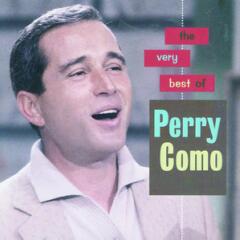
Perry Como (Pierino Ronald Como) was an American singer, actor and television personality. He was the first American-born child of his Italian parents. He started playing the keyboard at the age of 3 and later learned the trombone and guitar. As an adult, he became a successful barber. One night, he was coerced by his wife and friends into accepting an invitation at a nightclub in Cleveland to join Freddie Carlone and his orchestra to sing a song. Carlone was so impressed with Como’s singing that he offered him a job on the spot. Como accepted and went on the road with Carlone for the next 18 months, never looking back. He put out his first record with Ted Weems’ Orchestra, the novelty song “You Can’t Pull the Wool Over My Eyes,” on Decca Records in May 1936. Como got his own radio show with CBS in 1943 and cut his first solo record for RCA the same year. Como remained with RCA for the next 44 years. He released 38 studio albums, two live albums, 32 compilation albums and 150 singles. He has sold over 100 million records worldwide. He won five Emmy Awards, a Christopher Award, a Peabody Award, a Kennedy Center Honor, and is a member of the Academy of Television Arts and Sciences Hall of Fame, has a Grammy Lifetime Achievement Award and three stars on the Hollywood Walk of Fame for his work in radio, television and music. The Recording Industry Association of America’s first Gold record was issued for Como’s single “Catch a Falling Star,” released in March 1958. He was featured in several motion pictures, radio and television programs. Como died at his home in Jupiter Inlet Colony, FL, in May 2001 at 88.
"About the Song" -- written by Mickey McMahan , RBN Director of Musicology