


This winter will be the last go-round for ISO New England’s Winter Reliability Program, under which the electric-grid operator in the natural gas pipeline-challenged region provides financial incentives to dual-fuel power plants if they stockpile fuel oil or LNG as a backup fuel. This coming spring, a long-planned “pay-for-performance” regime will go into effect, and gas-fired generators that can’t meet their commitments to provide power during high-demand periods — such as the polar vortex cold snaps that hit the Northeast in early 2014 — will pay potentially significant penalties. Today, we discuss the pitfalls that the pipeline capacity-challenged region may encounter as its power sector becomes increasingly gas-dependent.
The NATGAS Appalachia weekly report provides the data and insights to monitor the northeast natural gas market’s twists and turns and identify the risks and opportunities along the way, including tracking supply-demand trends, outbound capacity and their impact on takeaway pipeline utilization, and regional prices.
Bostonians and other New Englanders pride themselves on their winter hardiness. They scoff at doomsday nor’easter forecasts from the Weather Channel. They think nothing of putting on five layers of L.L. Bean clothing to watch Tom Brady and the Patriots play in subzero temperatures at Gillette Stadium. They’ve even perfected the practice of saving the curbside parking space they just cleared of 20 inches of snow: it’s called the “parking chair” or “space saver” — usually an old plastic chair or Home Depot bucket that’s centered in the newly cleared space when they drive away so they have a nice place to park when they return from a quick run to Dunkin’ Donuts or Cumberland Farms. (Space saving is legal in most of Boston for up to 48 hours during a snow emergency.)
About the song
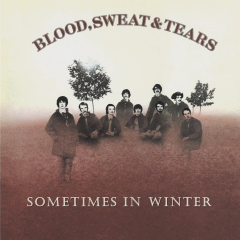
“Sometimes in Winter” is the third track from Blood, Sweat & Tears’ second album, Blood, Sweat & Tears, which was released in late 1968. The ballad was written and sung by the group’s guitarist, Steve Katz.
The Blood, Sweat & Tears album proved to be very popular — it sat at the top of the Billboard charts for seven consecutive weeks in early 1969. It was the first album featuring new singer David Clayton-Thomas, who sang lead vocals on all the cuts except "Sometimes In Winter." The James William Guercio-produced album yielded three Top 10 hit singles, and went platinum four times.
The group Blood, Sweat & Tears (BS&T) was started by Al Kooper in 1967 after his departure from The Blues Project. Influenced by The Electric Flag (whose members included his old guitar-playing buddy, Michael Bloomfield, who he had met during the recording of Bob Dylan's Highway 61 album) and by The Buckinghams’ Time and Changes album, Al grabbed fellow Blues Project member Steve Katz and put together the first version of BS&T. Their debut album, Child Is Father To The Man, went gold in early 1968.
The band decided they needed a new lead singer, which led to Kooper's departure in late 1968. After considering Alex Chilton from the recently broken up Box Tops, they settled on Canadian singer David Clayton-Thomas after seeing him perform in a club in New York City. Blood, Sweat & Tears has won three Grammy awards, was voted the best band two years in a row by the Playboy Jazz & Pop Poll, and has received three Downbeat awards.




Comments
Housley, another great blog regarding New England natural gas pipeline constraints. We are in the process of providing large volumes of incredibly affordable LNG to New England from the Marcellus region to alleviate these constraints. We commissioned a study last year on this issue. I would be happy to share it with you if you are interested.
Regards,
Andy Kelleher
CEO
Distributed Gas Solutions Canada
I suggest Enbridge, Exxon Mobile and Kinder Morgan exit the NE over the next few years and let the locals show their real hardiness with wind and solar powered power generation exclusively.