Over the past decade, floating LNG — for liquefying and shipping offshore natural gas supply — emerged as a promising technology that would enable development of smaller, more remote offshore gas fields around the world. But with a handful of projects now completed and in commercial operation, the challenges of financing, developing, and operating this relatively new technology are overshadowing its prospects. Of the more than 20 FLNG projects that have been proposed since 2007, only five have crossed the finish line and only two others have reached a favorable final investment decision (FID). Moreover, Shell’s Prelude FLNG offshore Northwest Australia — the largest of the existing FLNG facilities — has been dogged by issues since its commissioning in mid-2019, and the operator last week said the unit will not produce any more LNG cargoes this year, after being shut down since February for electrical problems. Today, we examine the headwinds facing FLNG projects.
2020 has been a challenging year for all of us, but perhaps U.S. LNG facility operators more than most in the energy sector. As we detailed in last week’s blog, Sultans of Swing, international LNG arbitrages have been squeezed this year due to the COVID pandemic, causing mass cargo cancellations. But the struggles of LNG producers extend beyond our shores — beyond any shores for that matter — with FLNG projects facing a host of their own issues.
As noted in the intro, the predicament of the Prelude FLNG project is a major disappointment not only for Shell, but for those in the industry who believed that floating LNG offered an important medium for monetizing stranded gas. In the 2007-10 period, the talking heads at conferences made extensive claims about the number of small, isolated offshore gas fields whose location precluded onshore LNG production, and there was no shortage of promoters touting their credentials as potential providers of FLNG technology. These included newcomers such as Flex LNG as well as established players such as Hoegh and SBM Offshore.
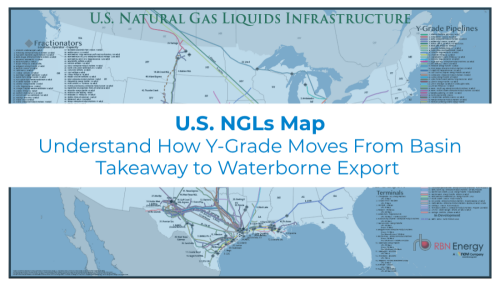
Visualize the infrastructure behind U.S. NGL movement.
The U.S. NGLs Map provides a comprehensive view of the transport, processing, and export networks moving NGLs across the U.S.
For its part, Shell planned Prelude to be the first (hence the name) of more units to come under the mantra of “design one, build many” and in July 2009 signed a master agreement with Technip and Samsung Heavy Industries for multiple units over a 15-year period. Prelude’s costs to date are estimated at between $10-$13 billion. But, as we mentioned, the unit struggled to hit its stride, and has produced only eight cargoes of LNG so far, out of a nameplate capacity of 3.6 million metric tons per annum (MMtpa), or about 0.5 Bcf/d.
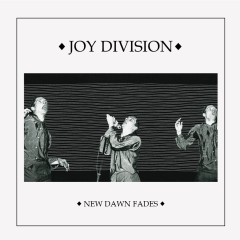
About the song
"New Dawn Fades" was written by Bernard Sumner, Peter Hook, Stephen Morris, and Ian Curtis. The song appears as the fifth cut on side one of Joy Division's debut album, Unknown Pleasures. It has been featured in several movies and covered by Moby, John Frusciante, and The Sight Below. Personnel on the record were: Ian Curtis (lead vocals), Bernard Sumner (guitar, keyboards), Peter Hook (bass, backing vocals), and Stephen Morris (drums, percussion).
Unknown Pleasures was recorded over three consecutive weekends at Strawberry Studios in Stockport, England, with Martin Hannett producing. Released in June 1979, the album failed to make the U.S. charts, but it is still considered an iconic album among fans of post-punk goth music. Artist Peter Saville designed the striking album cover art, using the image of a stacked lot of radio emissions given out by a pulsar. No singles were released from Unknown Pleasures. It would be the only full-length studio album released by Joy Division during lead singer Ian Curtis's lifetime.
Joy Division was an English goth rock band formed in Sandford, UK, in 1976. Originally going under the name "Warsaw," the band changed its name to Joy Division with the release of its independent EP, An Idea for Living, in 1978. Manchester television personality Tony Wilson signed the band to his Factory Records in 1979. The band has released two studio albums, four live albums, 12 compilation albums, three EPs, and five singles. Ian Curtis, who suffered from depression and epilepsy, tragically hung himself in May 1980, on the eve of Joy Division's departure for its first tour of North America. After Curtis's death, the band re-formed as New Order, with Bernard Sumner taking over the lead vocals. New Order would go on to have success and produce a large body of work from the ‘80s until the present time. Their latest single, "Be a Rebel," was released in September 2020.
For an interesting look into Ian Curtis, Joy Division, and Tony Wilson and Factory Records, check out the 2002 film, 24 Hour Party People. Another related film, Control, is a 2007 biopic movie directed by Joy Division photographer Anton Corbijn. It is Corbijn's directorial debut, and it offers a fascinating look into the life of Ian Curtis. More recently, his ex-wife Deborah Curtis also wrote a biography of Ian Curtis called Touching from a Distance.