Y-grade, welcome to the Hotel Fractionation. You can check in any time you like, but you can never leave! OK, so that’s a bit of an overstatement. But there is no doubt that the U.S. NGL market has entered a period of disruption unlike anything seen in recent memory. Mont Belvieu fractionation capacity is, for all intents and purposes, maxed out. Production of purity NGL products is constrained to what can be fractionated, and with ethane demand ramping up alongside new petchem plants coming online, ethane prices are soaring. But that’s only a symptom of the problem. Production of y-grade — that mix of NGLs produced from gas processing plants — continues to increase in the Permian and around the country. Sooo … If you can’t fractionate any more y-grade, what happens to those incremental y-grade barrels being produced? How much can the industry sock away in underground storage caverns? Does it make economic sense to put large volumes of y-grade into storage if it will be years before it can be withdrawn? — i.e., “you can never leave.” And what happens if y-grade storage capacity fills up? Today, we begin a blog series to consider these issues and how they might impact not only NGL markets, but the markets for natural gas and crude oil as well.
Fractionation, the process of splitting natural gas liquids (NGLs) into purity products — ethane, propane, butanes and natural gasoline — is as important to the NGL market as refining is to the crude and products markets. In fact, the functions are quite similar — take a raw material with no direct use and transform it into usable products. We’ve talked often about fractionation here in the RBN blogosphere, going back to oldies but goodies like Can Mont Belvieu Handle the NGL Supply Surge? and Talkin’ ‘Bout My F-F-Fractionation. Earlier this year, as fractionation capacity constraints started to become an issue, we kicked off a blog series on Mont Belvieu and other Texas fractionators (see Magical Mystery Tour, Part 7), and in We're Not in Kansas Anymore - Conway vs. Mont Belvieu, we showed how fractionation capacity constraints were the primary culprit behind the blowout in NGL price differentials between the NGL market hubs at Mont Belvieu (TX) and Conway (KS).

To truly understand Cushing — what it does and how it works — you need to know the hub’s assets and how they fit together. RBN’s Cushing Crude Oil Playbook provides the first one-stop, comprehensive guide to the hub’s assets.
In those blogs, we considered the implications of a tight fractionation market, but did not get the NGL heebie-jeebies. So what has changed? The answer is mostly one of magnitude. The situation is quickly becoming more dire. Fractionation capacity in Mont Belvieu, the rest of Texas and Louisiana is running at or near full capacity. Railcars of “x-grade” NGLs (mixed NGLs with less ethane than y-grade that can be transported by rail) are fanning out across the country looking for open fractionator space. Marcellus/Utica fractionators are being inundated with barrels from as far away as the Permian. Some midstream companies that move y-grade from the Permian through Mont Belvieu fractionation are said to be charging between 70 and 80 c/gal for spot transportation and fractionation fees (T&F), up from 15 c/gal before all this started.
About the song
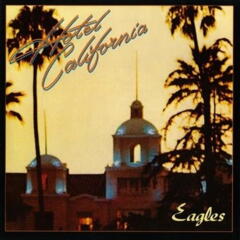
“Hotel California,” considered the most famous recording by the Eagles, was released in February 1977 on the Eagles album of the same name. Written by Don Felder, Don Henley and Glenn Fry, the song features Henley singing lead vocals and concludes with Felder and Joe Walsh progressing through an extended section of electric guitar interplay. The song was awarded the Grammy Award for Record of the Year in 1978. Hotel California hit #1 on the Billboard Hot 100 and reached the Top 10 on several international charts. The song has been covered by a number of artists and has become a part of international popular culture.
The Eagles, which formed in Los Angeles in 1971, have had five #1 singles and six #1 albums, and have sold more than 150 million albums worldwide, numbers that make the band the #1-selling American band of all time. The Eagles have won six Grammy Awards and five American Music Awards, and were inducted into the Rock & Roll Hall of Fame in 1998. Click here for what may be the best-ever live performance of “Hotel California.”