Natural gas prices in the U.S. were under pressure for many years, long before the COVID crisis gripped the world and threw energy markets into flux. Shale gas production, from both crude- and gas-focused basins, has driven U.S. output to incredible levels over the last 10 years. That growth has led to persistently low U.S. gas prices across the Lower 48, with the benchmark Henry Hub being no exception. The upshot of low gas prices has been steadily increasing demand, both in the domestic market and for exports of liquefied natural gas (LNG) to various markets around the globe. Until recently, those international markets had often been viewed as an insatiable demand sink, but reality has set in over the past year. Prices in Europe, one of the most popular destinations for U.S. LNG, have crashed below Henry Hub, and are threatening the once-steady flow of LNG. Market participants in the U.S. and Europe now find themselves poring over the fundamental details of both markets to determine how long the price weakness will last, or if it will only get worse from here. Today, we look at the increasingly interconnected gas markets on both sides of the Atlantic.
The gas markets in the U.S. and Europe, linked by ever-growing U.S. LNG export capacity, have kept us busy lately. In Break It To Me Gently, Part 2, we looked at how the convergence of Henry Hub and global gas prices has led to a steady decline in feedgas flows to American LNG facilities and a commensurate drop in the number of LNG cargoes exported from Lower-48 liquefaction facilities. That blog was a follow-up to Break It To Me Gently, which focused on not only the tightening spreads between U.S. and global prices, but also the various variable costs associated with shipping LNG between those markets. While those two pieces focused on more recent dynamics, you may also be interested in our Steady As She Goes series that we started late last year to analyze global price trends and how domestic LNG facilities would impact — and be impacted by — ongoing shifts in global markets.
To truly understand Cushing — what it does and how it works — you need to know the hub’s assets and how they fit together. RBN’s Cushing Crude Oil Playbook provides the first one-stop, comprehensive guide to the hub’s assets.
You may be wondering then why we are back so soon to discuss the interplay between the U.S. and European gas markets. The answer is simple: things just keep getting more interesting. The primary market-moving event of late has been a precipitous decline in Continental Europe gas prices, as measured at the Dutch TTF trading hub. A look at TTF prices (blue line in Figure 1) versus the U.S. Henry Hub benchmark prices (green line) so far this year shows the unprecedented shift that’s occurred in the past two weeks as TTF has continued to plunge. TTF recently fell to near $1.20/MMBtu, which is both well below the levels near $4/MMBtu seen earlier this year and below prices at Henry Hub (dashed red circle).
About the song
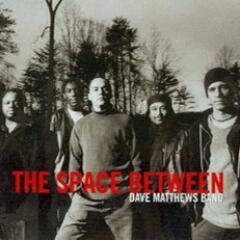
"The Space Between" was written by Dave Matthews and Glen Ballard, and appears as the third song on the Dave Matthews Band's fourth studio album, Everyday. Released as a single in April 2001, "The Space Between" went to #22 on the Billboard Hot 100 Singles chart, making it the band's first Top 40 hit. Personnel on the record were: Dave Matthews (lead vocal, acoustic, electric, baritone guitar), Carter Beauford (drums, percussion, backing vocals), Stefan Lessard (bass), LeRoi Moore (sax, flute, clarinet, backing vocals) and Boyd Tinsley (violin, backing vocals).
Everyday was recorded in October and November 2000 at Conway Studios in Los Angeles, with Glen Ballard producing. Three singles were released from the album. Everyday went to #1 on the Billboard Top 200 Albums chart, and has been certified 3x Platinum by the Recording Industry Association of America.
Dave Matthews Band is an American rock band formed in Charlottesville, VA, in 1991. Eleven members have passed through the band since its inception, with Dave Matthews, Carter Beauford and Stefan Lessard being the only remaining members from the original band. The band is known for its live performances and playing songs differently at each show, often involving lengthy jams. Dave Matthews Band has released nine studio albums, 85 live albums, three compilation albums, two EPs and 29 singles. They have won one Grammy Award, four VH1 Music Awards and one NAACP Image Award. The band still records and tours, and is currently doing a series of concerts at drive-in theaters this summer.