Energy Transfer’s plan to buy WTG Midstream, a West Texas-based and private equity-backed natural gas gatherer and processor, just got a bit less expensive — and not quite so comprehensive. Energy Transfer will still acquire WTG’s network of more than 6,000 miles of gas pipelines, eight processing plants and more, but WTG’s 20% stake in the joint-venture (JV) BANGL pipeline system is no longer part of the deal. In today’s RBN blog, we’ll take a look at the detour from the original transaction.

Dallas-based Energy Transfer (ET) has been among the most active buyers in what has been a vigorous midstream M&A cycle in recent years, as noted in our recent Drill Down Report, Let’s Work Together. We examined ET’s late-May announcement that it would buy WTG in a $3.25 billion cash-and-stock deal in You Ain’t Seen Nothin’ Yet, the latest in a series of acquisitions that bulked up ET’s oil, gas and NGL gathering, storage and long-haul pipeline holdings across multiple plays, from the mighty Permian Basin in West Texas and southeastern New Mexico to the Denver-Julesburg (DJ) Basin in Colorado and the Anadarko Basin in Oklahoma and Kansas.
The deal still includes WTG’s more than 6,000 miles of gas gathering pipelines that serve operators in the Permian’s Midland Basin, more specifically in West Texas’s Martin, Howard, Upton, Reagan and Irion counties (light-orange lines in Figure 1 below). WTG also has eight gas processing plants with a combined ~1.3 Bcf/d of capacity and two more under construction with about another 0.4 Bcf/d of capacity (red plant icons). The first of those new plants is slated to come online in Q3 2024, followed by the second in Q3 2025. The assets complement ET’s existing gas gathering lines (light-blue lines) and processing plants (blue plant icons) in the Permian.
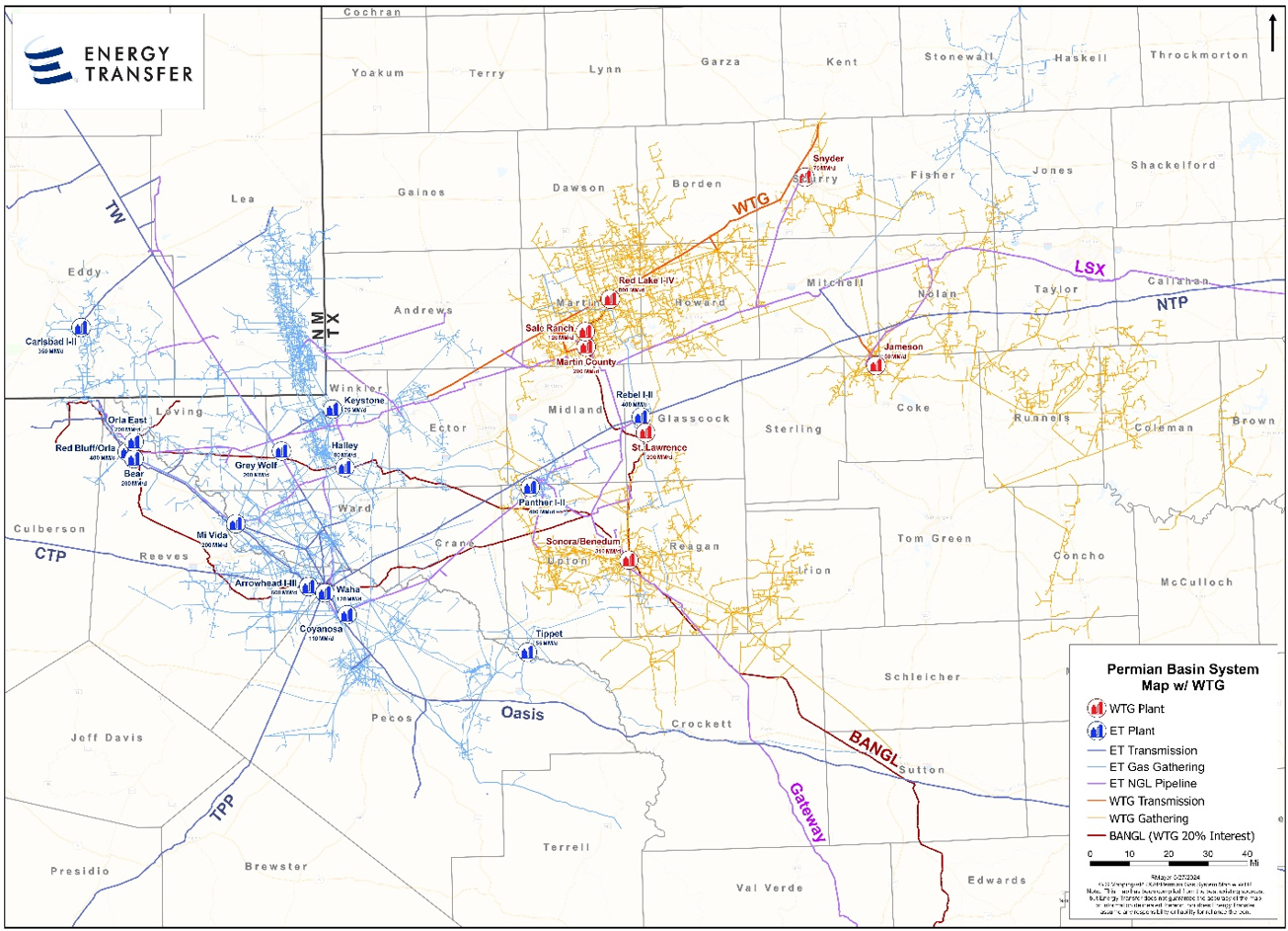
Figure 1. Energy Transfer and WTG Midstream’s Permian Basin Assets. Source: Energy Transfer
About the song
“Manic Monday” was written by Prince under the pseudonym “Christopher.” It appears as the first song on side one of the Bangles’ second studio album, Different Light. Released as the first single from the album in December 1985, it went to #2 on the Billboard Hot 100 Singles chart. The song was originally recorded as a duet with Prince and Apollonia for inclusion on the debut album for Apollonia 6, but Prince pulled the song and gave it to Susanna Hoffs for the Bangles to use. Prince was a big fan of the Bangles’ first album, All Over the Place. Personnel on the record were: Susanna Hoffs (lead vocals, guitar), Vicki Peterson (lead guitar, backing vocals), Debby Peterson (drums, backing vocals), Michael Steele (bass, backing vocals), Mitchell Froom (keyboards), David Kahne (keyboards, drum programming), and Carlos Vega (percussion).
Different Light was recorded at Sunset Sound and Sunset Sound Factory in Hollywood in 1985. Produced by David Kahne, the album was released in January 1986 and went to #2 on the Billboard 200 Albums chart. It has been certified 3x Platinum by the Recording Industry Association of America. Five singles were released from the LP.
The Bangles are a female pop-rock band formed in Los Angeles in 1981. The Peterson sisters, Susanna Hoffs, and Annette Zilinskas started playing together originally as The Colours in 1981. The group renamed themselves The Bangs and became part of the Los Angeles Paisley Underground scene in the early 1980s. They signed with Faulty Records and released an EP under their new name, The Bangles, in 1983. Zilinskas left the band to work on her own project, Blood on the Saddle, and was replaced by bassist Michael Steele from Toni & The Movers. The Bangles released their debut album, All Over the Place, on Columbia Records in 1984. They have released five studio albums, 10 compilation albums, one EP, and 25 singles. They have won a Brit Award and an ASCAP Pop Music Award. The group broke up in 1989 and reformed in 1998. Nine members have passed through the band since its formation. The band still occasionally performs with the lineup of Hoffs, the Peterson sisters, and a rotating cast of bass players.