U.S. propane production has been on the rise for most of 2019, but propane consumption by steam crackers has been reined in by poor economics, and propane exports have been constrained by export-capacity shortfalls. That’s led to a big buildup in propane inventories, which stand at near-record levels as the market prepares for a winter heating season that is forecasted to be milder than normal. So we’re in for only a modest draw on propane stocks between now and spring, right? Not necessarily. There’s change in the air regarding propane supply, cracker demand and export capacity and, as we learned in the balmy winter of 2016-17, the U.S. propane market isn’t nearly as dependent on the weather as it used to be. Today, we assess recent market developments and explain why a big decline in propane stocks is a real possibility.
Propane is an NGL purity product that has two primary uses: as a fuel (mostly for heating, but also for cooking and crop drying, and occasionally for cars, trucks and buses) or as a feedstock for petrochemical plants (steam crackers to make ethylene, or propane dehydrogenation — PDH — plants to make propylene). Propane also has two primary sources of supply: refineries and natural gas processing plants, the latter of which separate out mixed NGLs from natural gas streams. These mixed NGLs from processing plants (also known as y-grade) then are sent to fractionators, where y-grade is divvied up into what are called “purity” products (ethane, propane, normal butane, isobutane and natural gasoline). The Shale Revolution has enabled the U.S. to produce more than enough propane to meet its own heating and petchem needs, and to become a major exporter of propane.

Visualize the infrastructure behind U.S. NGL movement.
The U.S. NGLs Map provides a comprehensive view of the transport, processing, and export networks moving NGLs across the U.S.
As we said in our Complicated blog back in April, the U.S. propane market’s ups and downs traditionally were influenced primarily by winter weather. Things have gotten much more complicated in the past few years, though, due to a combination of rapid NGL production growth, a generally booming propane export market, and the vagaries of petchem margins. Nowadays, to get a handle on propane prices and inventories, you not only need to be able to forecast the weather, but you also need to monitor international propane “arbs” and steam cracker economics, as well as crude prices, because they have a significant effect on NGL output and propane supply.
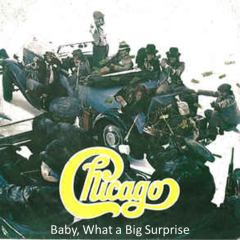
About the song
"Baby, What a Big Surprise" was written and sung by Peter Cetera. It was the first single released from Chicago's 11th album, Chicago XI. The single was released in September 1977, and went to #4 on the Billboard Hot 100 chart. Personnel on the record were: Peter Cetera (lead, backing vocals), Robert Lamm (piano), Terry Kath (electric guitars), Danny Seraphine (drums), Walt Parazaider (flute), Lee Loughnane (trumpet, backing vocals), Carl Wilson (backing vocals), Tim Cetera (backing vocals), James Guercio (orchestration, bass, acoustic guitar), and Dominic Frontiere (orchestration). Peter Cetera re-recorded the song for inclusion on his 1997 solo album, You're the Inspiration: A Collection.
Chicago XI was recorded at Caribou Ranch in Colorado in April-June 1977, and was the last album the band recorded with long-time producer James Guercio. The album was released in September 1977, and went to #6 on the Billboard Top 200 Albums chart. It has been certified Platinum by the Recording Industry Association of America (RIAA). Personnel on Chicago XI were: Peter Cetera (bass, lead vocals, backing vocals), Terry Kath ( guitar, lead vocals, backing vocals), Laudir de Oliveira (percussion), Robert Lamm (keyboards, lead vocals, backing vocals), Lee Loughnane (trumpet, lead vocals, backing vocals), James Pankow (trombone, lead vocals, backing vocals), Walter Parazaider (sax, flute, clarinet), and Danny Seraphine (drums). This was the last Chicago album with guitarist Terry Kath, due to his accidental death in January 1978.
Chicago is an American rock band formed in Chicago in 1967. They were originally called "Chicago Transit Authority," but the name was shortened to "Chicago" in 1969. They were one of the first successful bands to combine rock and roll with a full horn section. They have sold over 40 million records, and have 23 Gold, 18 Platinum and eight multi-Platinum albums as certified by the RIAA. They have released 24 studio albums, seven live albums, 11 compilation albums and 64 singles to date. Chicago has won eight American Music Awards, three Billboard Awards and two Grammy Awards, and has been inducted into the Rock and Roll Hall of Fame and Songwriters Hall of Fame. The band still records and tours with original members Robert Lamm, Lee Loughnane and James Pankow.