On average, the landowners and other entities that own mineral and royalty interests in producing oil and gas wells receive about 20% of the gross revenues generated by those wells — and do so without any responsibility for the significant costs and complications associated with well development and production. Mineral and royalty interests have traditionally been a highly fragmented market, with most held and passed down through generations by landowners or purchased by individual investors. However, competition for these interests has become more heated in recent years with the creation of large publicly owned and private-equity-funded consolidators and a new emphasis by E&P companies on adding these higher-margin slices of revenue from leases they own and operate. In today’s RBN blog, we explain mineral and royalty interests and analyze the developments in this massive $700 billion market.
As the oil and gas industry has evolved from a growth-at-any-cost strategy to a laser focus on generating free cash flow, it’s not surprising to learn that there has also been an increase in competition for the highest-margin portions of the revenue produced by every well — the average 20% paid to holders of mineral and royalty interests by producers of lease acreage. Because E&Ps agree to fund 100% of development and production costs, the mineral and royalty interest holders receive a much higher percentage of the gross revenues of each well while remaining free of development/production costs and shielded from the impact of inflation. That has helped to make mineral and royalty interests hot commodities pursued by a variety of entities looking to boost returns on oil and gas investments.

The replay of our Fall 2026 School of Energy (September 9 & 10, Houston) is now available online!
Learn from RBN experts, participate in hands-on Excel modeling, connect with industry peers, and gain a stronger understanding of today's interconnected energy markets.
Before we dive deeper on this, let’s quickly define a few key terms and explain the financial side of well development and who gets what money-wise from a producing well.
About the song
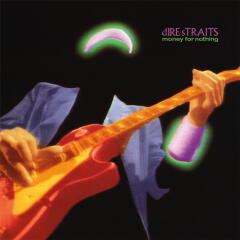
“Money for Nothing” was written by Mark Knopfler and Sting and appears as the second song on side one of Dire Straits’ fifth studio album, Brothers in Arms. Knopfler was inspired to write the song by comments from an employee at a New York City appliance store about an MTV video playing on one of the store’s television sets: “Money for nothing and chicks for free.” Sting makes an appearance on the song, singing “I want my MTV” to the melody of The Police’s “Don’t Stand So Close to Me.” Released as the second single from the LP in June 1985, it went to #1 on the Billboard Hot 100 Singles chart. It won the band a Grammy Award in 1986 and the Video of the Year Award at the third annual MTV Video Music Awards. Personnel on the record were: Mark Knopfler (lead vocals, guitar), John Illsley (bass, backing vocals), Guy Fletcher (synthesizer, Synclavier, keyboards), Alan Clark (Hammond organ), Terry Williams (drum intro), Omar Hakim (drums), and Sting (vocals).
Brothers in Arms was recorded at AIR Studios in Montserrat between October 1984 and February 1985, and produced by Mark Knopfler and Neil Dorfsman. The album was released in May 1985 and went to #1 on the Billboard 200 Albums chart, where it stayed for nine weeks. It has been certified 9X Platinum by the Recording Industry Association of America. Five singles were released from the LP.
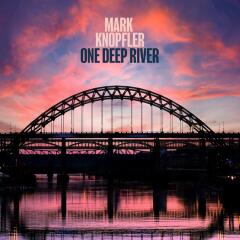
Dire Straits was a British rock band formed in London in 1977 by Mark Knopfler, David Knopfler, John Illsley, and Pick Withers. They were active from 1977 to 1988 and again from 1991 to 1995. Twelve members passed through the band since their formation, with Mark Knopfler always at the helm. They released six studio albums, five live albums, three compilation albums, three EPs and 31 singles and have sold more than 100 million records worldwide. Dire Straits has won four Grammy Awards, three Brit Awards and two MTV Video Music Awards and are members of the Rock and Roll Hall of Fame. Mark Knopfler continues as a solo artist and retired from touring after a final concert at Madison Square Garden in September 2019. His latest album, One Deep River, was released in April 2024.
"About the Song" -- written by Mickey McMahan , RBN Director of Musicology