The U.S. is at the tail end of an incredible wave of LNG expansion that has so far seen nine new projects across seven terminals reach a final investment decision (FID) in a little over a year. The two latest projects, Commonwealth LNG and Delfin FLNG, had been approaching the developmental finish line for some time. Commonwealth’s greenlight should come as no surprise, while Delfin’s was somewhat more unexpected. But more important than the individual projects, the overall scale of the buildout coming in the back half of this decade and into early next decade is staggering. The U.S. can export around 16.1 Bcf/d of LNG today, with another 1.2 Bcf/d of capacity ramping online, but capacity will be around 33 Bcf/d by early next decade given the number of projects that have reached FID or are under construction. For reference, that’s less than 3 Bcf/d shy of total U.S. gas demand for power in 2025. In today’s RBN blog, we take a closer look at this incredible wave of investment, the Commonwealth LNG project and what comes next for U.S. LNG development.
This latest round of commitments to U.S. LNG started out with a surprise. In late April 2025, Australia’s Woodside Energy announced that it was moving forward with the 16.5 million tons per annum (MMtpa; 2.2 Bcf/d) Louisiana LNG (purple-and-white striped diamond in Figure 1 below) despite having almost no long-term sales for the project — seeI’m Back (Back in the LNG Groove). Woodside decided to stick with the method it had used to develop its Australian projects, where it sold ownership interest to de-risk its investment, rather than conform to the typical development approach of U.S. builders, which relies heavily on long-term sales to underpin a project. That was soon followed by a Cheniere Energy FID on a small Corpus Christi expansion project (orange-and-white striped diamond) in June and then Venture Global’s FID of CP2 Phase 1 (pink-and-white striped diamond) in July. Then, last fall, Sempra greenlit two additional trains at the under-construction Port Arthur LNG (aqua-and-gray striped diamonds), and NextDecade also added two trains (Train 4 in September and Train 5 in November) to Rio Grande LNG (bright-green-and-gray striped diamonds) in South Texas.
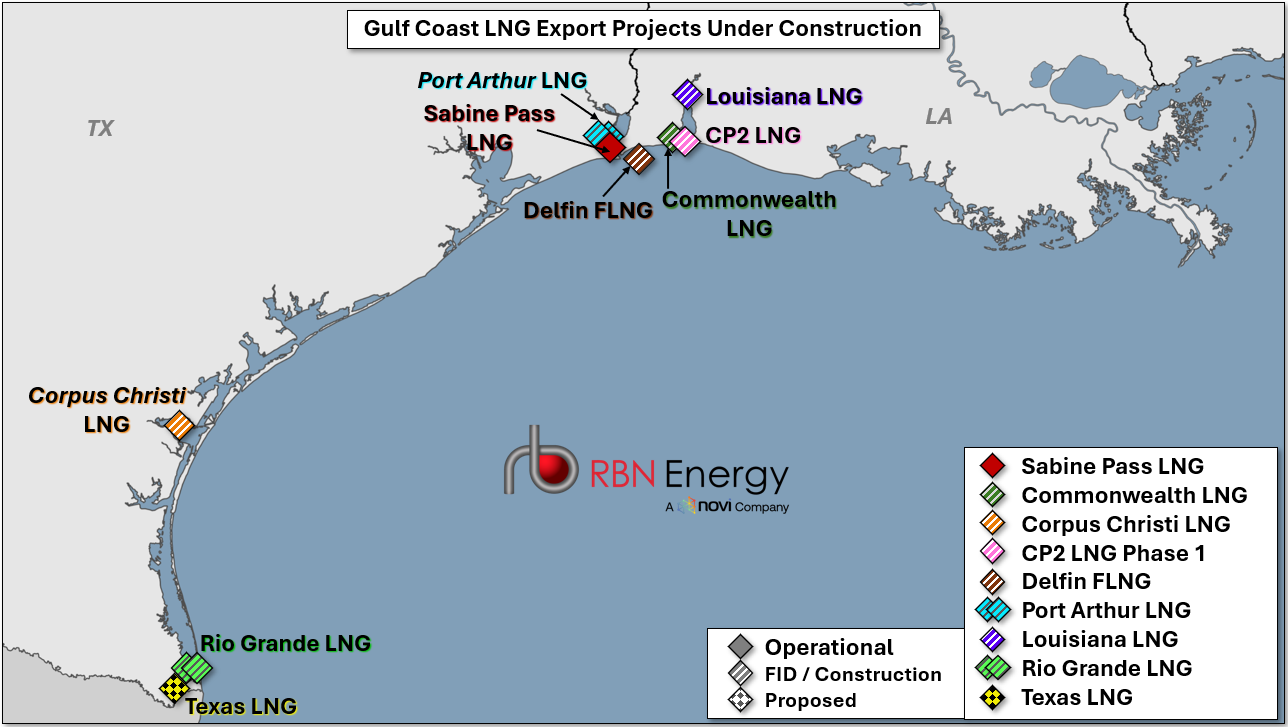
Figure 1. Gulf Coast LNG Export Projects Under Construction. Source: LNG Voyager
Propane Exports Hit All-Time High, With Neches River Leading the Way
According to data from the NGL Voyager Report, propane exports reached an all-time high of 2.1 MMb/d in May. The increase was largely due to more volume exported out of Enterprise’s Neches River flex terminal.
About the song
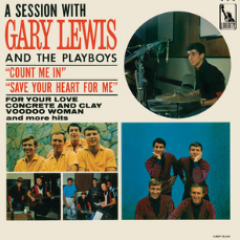
“Count Me In” was written by Glen D. Hardin and appears as the first song on side one of Gary Lewis and the Playboys’ second studio album, A Session With Gary Lewis and the Playboys. The song is an upbeat tune about loyalty, love and being supportive. Released as a single in March 1965, it went to #2 on the Billboard Hot 100 Singles chart and has been certified Gold by the Recording Industry Association of America (RIAA). Personnel on the record were: Gary Lewis (lead vocals), Ron Hicklin (ghost lead vocals, doubling Lewis), Tommy Alsup (guitar), Carol Kaye (bass), Hal Blaine (drums), and Leon Russell (piano, organ, celeste). The single was arranged by Leon Russell and produced by Snuff Garrett.
A Session With Gary Lewis and the Playboys was recorded in early 1965 at United/Western Recorders in Hollywood and produced by Snuff Garrett. Released in August 1965, it went to #18 on the Billboard 200 Albums chart. Two charting singles were released from the LP.
Gary Lewis and the Playboys were a 1960s pop-rock group fronted by comedian Jerry Lewis’ son, Gary. They got discovered while they were the house band at Disneyland. They had a fresh-scrubbed, boy-next-door image similar to Brit-pop groups like Herman’s Hermits and Freddie and the Dreamers. Producer Snuff Garrett helped the group secure a record deal with Liberty Records in Hollywood. They released 13 studio albums, one live album, four compilation albums and 25 singles. As a side note, Gary Lewis and the Playboys' bassist, Carl Radle, went on to play with Delaney and Bonnie, Mad Dogs and Englishmen, Derek and the Dominoes, Leon Russell, and Eric Clapton, before dying in Tulsa in May 1980 at 37. Gary Lewis and the Playboys officially broke up in 1970. Twelve members have passed through the band since its formation. Lewis still makes appearances with a touring band called Gary Lewis and the Playboys. At 80, he and his family reside in Rush, NY.
"About the Song" -- written by Mickey McMahan , RBN Director of Musicology