Just one year ago, the onset of the COVID-19 pandemic plunged the energy industry’s exploration and production (E&P) sector — already reeling from a steep decline in oil prices in late 2019 — into a memorably brutal spring that threatened its survival. Demand cratered, price realizations fell to the lowest point in a decade, and cash flows dried up. Sure enough, E&P results for the first half of 2020 were a train wreck, with the three-dozen companies we track reporting a whopping $45 billion in losses, including impairments. But the dark clouds hovering over the industry began to clear in the second half of the year as the combination of production cutbacks and recovering demand triggered rising prices. With the massive price-related impairments largely in the rear-view mirror, year-end 2020 results revealed that most E&Ps had clawed their way back to near-profitability. Today, we review their latest numbers and preview what we expect will be a sunny 2021 for the industry.
As we said in our Getting Better blog last summer, no one in North America’s energy industry is likely to forget the second quarter of 2020 anytime soon. In those months — April, May, and June — the demand-destruction effects of COVID-19 took root; the price of West Texas Intermediate (WTI) bottomed out, even going negative for a day; and crude oil-focused drillers in particular shut in vast numbers of wells (see Shut Down). By late July and August, when E&Ps announced their results for the second quarter, it came as no surprise that the write-downs and losses were generally immense and, in many cases, record-shattering. But WTI prices rebounded — so did production — and third-quarter results announced in late October and November were much better, a topic we discussed in depth in Shake It Out.

The situation for the E&P sector improved further in the fourth quarter of 2020 — and, it seems, in the first three months of 2021. As shown in Figure 1, the 36 E&Ps in our coverage universe reported a fourth quarter 2020 net loss of nearly $2 billion ($2.01 per barrel of oil equivalent, or boe), less than half the $4.2 billion ($4.30/boe) loss in the third quarter and a sea-change from the $45.5 billion in losses in the first half of 2020. Excluding impairments, the E&Ps we monitor generated a net operating profit of $2.45 billion in the fourth quarter, double the comparable $1.22 billion in the third quarter. They generated $13.8 billion ($14.16/boe) in cash flow, 18% higher than the previous quarter and almost triple the $5 billion reported in the second quarter of last year. Part of the improvement was driven by higher realized prices, as our universe of companies garnered $23.54 per boe produced in the final quarter of 2020, up 13% from the third quarter, 67% higher than the April-June period, and just short of the $25.53/boe in the mostly pre-pandemic first quarter. Impairment charges declined to $4.5 billion ($4.53/boe) from $5.4 billion in the third quarter and the staggering $44 billion in the first half of 2020. The benefits of higher prices and lower impairment charges was slightly offset by a 7%, or $0.60/boe, increase in lifting costs.
About the song
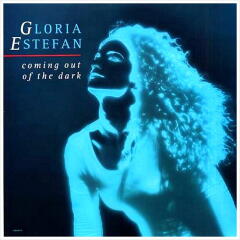
"Coming Out of the Dark" was written by Gloria and Emilio Estefan, along with Jon Secada, and appears as the first song on Gloria Estefan's second solo studio album, Into the Light. Released as a single in January 1991, it went to #1 on the Billboard Hot 100 Singles chart. It was the first single released after Estefan's near-fatal accident, when an 18-wheeler crashed into her tour bus in March 1990. Personnel on the record were: Gloria Estefan (lead, background vocals); Angelo Morris and Clay Ostwald (keyboards); Brian Monroney, John DeFaria, and Scott Shapiro (guitar); Jorge Casas (bass); Robert Rodriguez and Tom McWilliams (drums); Randy Barlow and Arturo Sandoval (trumpet); Teddy Mulet (trombone); Mike Scaglione (sax); Emilio Estefan Jr. (congas); Rafael Padilla (percussion); Juan Marquez (12-string guitar); and 10 background vocalists.
Into the Light was recorded at Crescent Moon Studios in Miami during 1990. Produced by Emilio Estefan Jr., Jorge Casas, and Clay Ostwald, it was released in January 1991. It went to #5 on the Billboard Top 200 Albums chart and has been certified 2X Platinum by the Recording Industry Association of America. Into the Light was a concept album, with the songs focused on bouncing back from disaster, which Estefan did after her tour bus accident. Six singles were released from the LP.
Gloria Estefan is a Cuban-American singer, songwriter, actress, and businesswoman, and was the lead vocalist for Miami Sound Machine from 1977 to 1989, when she started her solo career. She has released 14 studio albums, 14 compilation albums, four EPs, and 49 singles, and has sold more than 75 million records worldwide. Estefan has won an American Music Award for Lifetime Achievement, three Grammy Awards, a BMI Songwriter of the Year Award, an MTV Video Music Award, and multiple Billboard Awards. She has received Kennedy Center Honors, the Presidential Medal of Freedom, and is in the Songwriters Hall of Fame. Estefan continues to record and tour.