The current winter heating season in Canada has seen extremes of warmth and cold, but much more of the former than the latter. Given that the Canadian natural gas market was already oversupplied and struggling with record-high gas storage levels as winter approached, even the most intense cold blast in mid-January wasn’t enough to return the supply/demand balance north of the 49th parallel to anything near normal. In today’s RBN blog, we discuss where the Canadian market stands as the calendar turns to February and what that might mean for end-of-winter gas balances.
The current heating season across North America has proven to be one of the more unusual in recent years. Blowtorch warmth in November and (especially) December was followed by a bone-chilling cold blast for many of us through about half of January. The crazy swings in Canadian heating loads have left the natural gas market — at just past the halfway point of the heating season — in more of a dazed state than is usually the case. The extreme fluctuations have also greatly affected market balances in such a way that a distinct overhang of gas supply, present since late last summer, seems likely to persist to the end of the current heating season and into the summer of 2024.

Join industry leaders in Calgary on October 29 for market insights, technical presentations, Duvernay inventory analysis, an expert panel, and networking focused on the next chapter of Canadian energy.
Being dependent on both a cold winter and strong gas exports to the U.S. to help balance out its natural gas market, the Canadian gas market has been put through the wringer since last spring. As we discussed in Burning Down the House, a milder-than-average heating season last winter left plenty of gas in storage, pushing natural gas prices lower across Canada and the U.S. Second, tinder-dry conditions in some of the best gas production areas in Alberta and British Columbia sparked a very active wildfire season — and forced producers to curtail their gas output numerous times in May and June. Those impacts left the Canadian gas market close to balanced by mid-summer, but a more-than-full recovery in gas production left the market oversupplied again by fall, with gas storage in both Eastern and Western Canada at very high levels heading into the current heating season.
Numerous times in the past, we have examined Canadian gas market balances in which oversupply, thanks to a warmer-than-average winter, led to record-high gas storage levels by the end of the injection season (spanning the start of April to the end of October). In East Bound and Down, we looked at the opposite situation of an undersupplied market thanks to the colder-than-average winter of 2021-22 and considered the potential for storage levels to be lower than average in both Eastern and Western Canada by the end of October 2022. As it turned out, storage levels in Canada’s eastern half did not fall quite as low as we thought they could, but Western Canada did start the 2022-23 heating season at lower-than-average levels, as we had suggested. This time around, we appear to be locked into another warmer-than-average winter — despite the memorable cold snap of mid-January — that could leave the market in another oversupplied situation, similar to what happened in the winter of 2022-23.
About the song
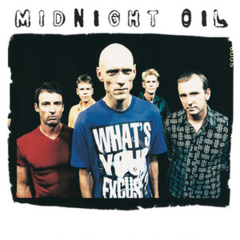
“Back on the Borderline” was written by Peter Garrett, Rob Hirst, and Andrew James. It appears as the fourth song on side one of Midnight Oil’s second studio album, Head Injuries. Released as the second single from the album in February 1980, it failed to make the U.S. charts. Personnel on the record were: Peter Garrett (lead vocals), Rob Hirst (drums, backing vocals), Andrew James (bass, backing vocals), Martin Rotsey (guitar), and Jim Moginie (guitar, keyboards).
Head Injuries was recorded in July and August 1979 at Trafalgar Studios in Sydney, Australia, with Lester J. Karski producing. Released on the band’s Powderworks label in October 1979, it went to #36 on the Australian Kent Music Report Albums chart. Founding Midnight Oil bassist Andrew James left the band after the album’s release and was replaced by Peter Gifford. Two singles were released from the LP.
Midnight Oil (referred to as “The Oils” by their fans) are an Australian rock band formed in Sydney in 1972 under the name Farm. Guitarist Jim Moginie, drummer Rob Hirst, and bassist Andrew James were the founding members. Vocalist Peter Garrett joined the band in 1973, and the group changed its name to Midnight Oil in 1976. The band had become very popular in Australia because of their workingman’s pub rock sound and extensive road work. They released their first LP in 1978, and have released 13 studio albums, seven live albums, six compilation albums, two EPs, and 43 singles. Midnight Oil has sold more than 20 million records worldwide. Seven members have passed through the band since its formation. The group broke up in 2002 but reformed in 2017. They continue to record and tour.