Only a few years ago, pretty much all the natural gas flowing through pipelines in the southeastern U.S. was headed north to serve demand in the Northeast and the Midwest. But that’s all been changing — and fast. Gas production in the Marcellus/Utica has soared and now meets the needs of the Northeast and more. And, as LNG exports from the Gulf Coast ramp up and Southeast gas demand for power generation rises, more and more Marcellus/Utica gas is flowing south, raising the question of whether pipes in the Southeast can handle it all over the long term. Today, we discuss the findings of RBN’s work in preparing a study for the American Petroleum Institute (API) on the adequacy of regional gas pipeline infrastructure. RBN’s work discussed here is the current analysis being used to inform and develop stakeholder briefings. We anticipate API will release the final version in report form, after its completion.
Back in 2014, we posted (South)Eastbound and Down – The Southeast, Emerging Demand Epicenter of U.S. Gas Industry, in which we recounted the findings of a study of the southeastern U.S. and how it would be supplied, performed for America’s Natural Gas Alliance (ANGA). At the time, we suggested it might be the first installment in a series, but then never got around to doing another installment. Oops. Now ANGA is a part of the American Petroleum Institute (API). So, believing that even three years isn’t too late to flesh out and update such an important subject, here we are with a new study looking at many of the same issues for API — updated for the rapid evolution of the facts during those three years, as flows have reversed from the traditional south-north, to north-south. Basically, how are we doing?
The 2014 study defined the Southeast as 10 states: Louisiana, Arkansas, Mississippi, Alabama, Florida, Georgia, North Carolina, South Carolina, Tennessee and Kentucky. It quantified demand growth in all the states. Then it examined the ample new gas supplies growing out of the Northeast and MidContinent, and on the many pipeline projects proposed to bring those supplies south –– a topic we’ve blogged about frequently, including in Turn the World Around and Too Much Pipe on Our Hands?. The study concluded that Southeast demand would grow by almost 9 billion cubic feet a day (Bcf/d) by the mid-2020s and that pipeline projects of just under 10 Bcf/d would serve that growth.
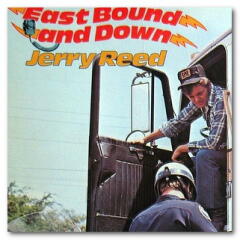
About the song
“East Bound and Down” was written by Jerry Reed and Dick Feller. It was written for the soundtrack of the film Smokey and the Bandit and appears as the 10th song on the soundtrack album. Produced and sung by Jerry Reed, it was released as a single in August 1977 and went to #2 on the Billboard Hot Country Singles chart. Reed, who was a co-star in Smokey and the Bandit, also released the song on his 1977 solo album of the same title. Personnel on the album were: Jerry Reed (lead vocals, guitar), Gordon Stoker (backing vocals), Beegie Adair (keyboards), and Bobby Thompson (banjo).
Smokey and the Bandit: Music from the Motion Picture was released in August 1977 and went to #10 on the Billboard Top 200 Albums chart. The movie was an American road trip action comedy starring Burt Reynolds, Sally Field, Jackie Gleason, Jerry Reed, Paul Williams, Pat McCormick, and a 1976 Pontiac Firebird Trans Am with a 1977 front end.
Jerry Reed was an American country music singer, guitarist, songwriter and actor. He released 50 studio albums and 59 singles. He appeared in 22 television shows and motion pictures. Reed won two Country Music Association Awards and three Grammy Awards. He was a member of the Country Music Hall of Fame and the Musicians Hall of Fame. Reed died in Nashville in 2008 at the age of 71.