


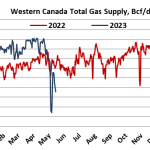
Wildfires in Alberta continue to play havoc with natural gas production in Western Canada, although you would not know it from looking at prices. May-to-date average production has fallen 1.9 Bcf/d (~11%) versus April’s record, with no clear sign when the worst of the wildfire threat and production curtailments will end. Prices have taken little notice with AECO trading back in a similar flat range after a brief and modest price spike. There is simply not enough demand at present, still too much production in other parts of North America, and plenty of above average gas storage everywhere, for the wildfire disruptions to make much difference to Canadian gas prices.
Featured Articles


- Blog
Burning Down the House - Wildfires, Pipeline Maintenance Punish Western Canadian Gas Production
Western Canada’s natural gas production has been on a roll in the past couple of years, reaching a record 17.3 Bcf/d in 2022. Another year of strong growth was expected in 2023, but Mother Nature had other plans — as usual. First, a milder-than-average heating season left plenty of gas in storage, pushing natural gas prices lower across North America. Second, tinder-dry conditions in some of the best gas production areas in Alberta and British Columbia sparked what so far has been a very active wildfire season — and forced producers to curtail their gas output numerous times in May and June. From our early expectations for production growth of 1.2 to 1.4 Bcf/d this year, the impacts from wildfires and a healthy dose of pipeline maintenance has chopped our 2023 production growth outlook to just 0.4 Bcf/d. As we discuss in today’s RBN blog, this slowdown in growth is exactly the opposite of what’s needed to avoid a runup in prices. Strong production momentum will be required into 2024 and 2025 to deal with the startup of the LNG Canada export facility, ongoing Canadian gas demand growth and pipeline exports to the U.S.


- Blog
Got Me Under Pressure, Part 2 - Potential Gas Demand Impacts of Alberta Oil Sands Supply Cuts
Significantly reduced demand for crude oil by refineries is spurring production cuts in Alberta’s oil sands, and that could lead to a major decline in demand for Western Canadian natural gas. The oil sands are the single largest consumer of natural gas in Canada, accounting for more than half of the gas used in Alberta year-round and up to 37% of the gas used nationwide. With that kind of clout, anything that affects gas consumption in the oil sands is bound to have an outsized impact on the Alberta and overall Canadian natural gas markets. Today, we conclude our series on the effects of COVID-related disruptions on the Canadian natural gas market.


- Blog
AECO Prison Blues - Western Canadian Gas Prices Stuck Behind Bars, Even After Winter Price Surges
Western Canada’s natural gas market never really seems to catch a break. Prices this winter have remained well below those across much of the rest of North America thanks to an all-too-common combination of insufficient pipeline export capacity from the region, bloated gas storage and robust supply growth. Even with forward price prospects for much of the rest of the continent looking buoyant, with more gas expected to head to expanding Gulf Coast LNG terminals and a storage-refill season that will be stronger than last year, price upside for Western Canada looks to be minimal at best and will be partly dependent on the rate of gas intake to LNG Canada, as we explain in today’s RBN blog.
